
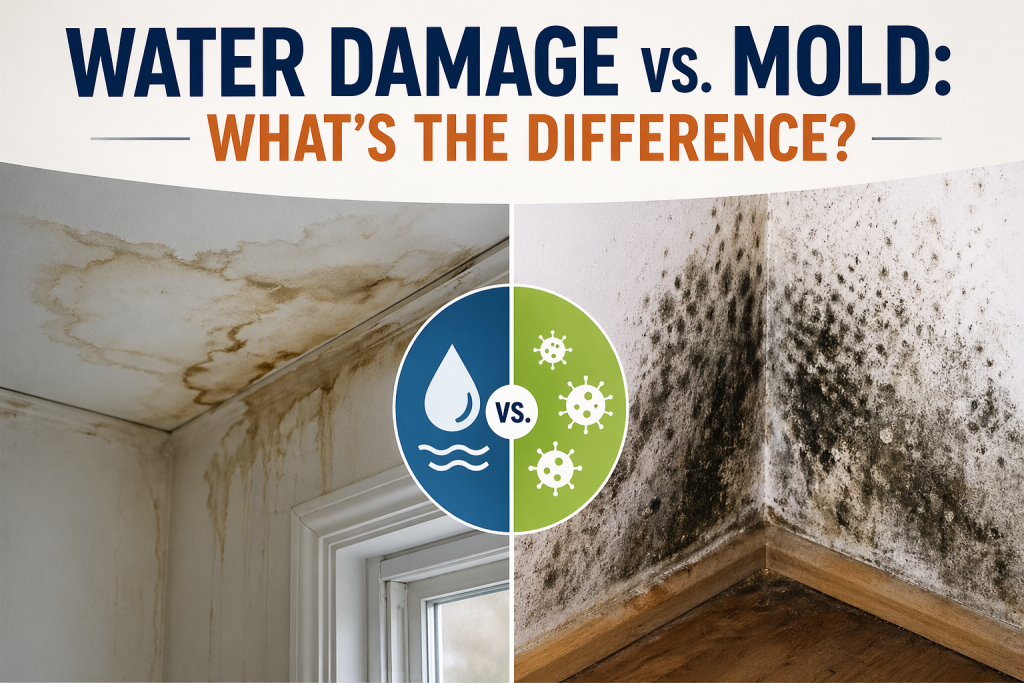
Facing moisture issues in your Las Vegas home can be stressful. Whether it’s a sudden burst in the pipe or a mysterious dark spot on the ceiling, understanding the problem is the first step toward a solution. Many homeowners confuse water damage with mold, but they are distinct issues requiring different approaches. While water damage is the immediate result of excess moisture, mold is a biological byproduct that follows if the water isn’t addressed. This article explores the key differences between water damage and mold so you can protect both your property and your health.
What is Water Damage?
Water damage refers to the physical destruction or alteration of materials caused by water intrusion. In Las Vegas, this often stems from leaking air conditioning units, plumbing failures, or rare but intense flash floods. When water saturates drywall, wood, or flooring, it weakens the structural integrity of your home.
Common signs of water damage include:
- Discoloration: Yellow, orange, or brown stains on walls and ceilings.
- Texture Changes: Peeling paint, bubbling wallpaper, or warping wood floors.
- Structural Softness: Drywall that feels “spongy” or sags when touched.
- Pooling Water: Visible puddles near appliances or under sinks.
Water damage is often an emergency because it can lead to immediate electrical hazards and structural collapse if the volume of water is significant.
What is Mold?
Mold is a type of fungus that grows in moist and warm environments. Unlike water damage, which is a physical state of saturation, mold is a living organism that consumes organic material like the paper backing on drywall or wood studs. Mold spores are everywhere, but they only become a problem when they find a moisture source and a food source.
Signs of mold growth include:
- Visible Patches: Fuzzy, slimy, or powdery spots that can be black, green, white, or even pink.
- Persistent Odor: A distinct “musty” or “earthy” smell that doesn’t go away with cleaning.
- Health Symptoms: Increased allergies, coughing, or respiratory issues among residents.
In the dry climate of Southern Nevada, mold often hides behind walls or under cabinets where moisture from a slow leak remains trapped.
Water Damage vs. Mold: 5 Key Differences
While they are related, several factors distinguish water damage from mold growth.
1. Physical Appearance and Texture
Water damage typically manifests as a stain. Think of a coffee ring on a napkin. The area is discolored but usually flat unless the material is severely warped. Mold, however, has a distinct texture. It can look like a velvet coating, a slimy film, or a cluster of small specks. If you see “growth” rather than just a “stain,” you are likely dealing with mold.
2. The Smell Factor
Water damage itself might smell like wet laundry or nothing at all if the water is clean (like from a supply line). Mold produces a strong, distinctive, and often unpleasant odor. It’s often described as the smell of a damp basement or rotting wood. If a room smells “off” even when it looks dry, mold might be growing in the dark recesses of the structure.
3. Timeline of Development
Water damage happens the moment water touches a surface. Mold, however, takes time to grow. Typically, mold spores can begin to colonize and become visible within 24 to 48 hours after water exposure. This is why rapid water damage repair in Las Vegas is so critical. You have a very narrow window to prevent a water problem from becoming a mold problem.
4. Health Risks
While standing water can be a drowning or electrical hazard, it doesn’t usually cause respiratory issues unless it is “black water” (sewage). Mold is a different story. Long term exposure to mold spores can cause chronic respiratory issues, skin irritation, and severe allergic reactions. For people with asthma or weakened immune systems, mold is a significant health threat.
5. Remediation and Cost
Repairing water damage usually involves drying out the area and replacing damaged materials such as drywall or carpet. Mold remediation is more complex. It requires containment (to prevent spores from spreading), specialized air scrubbing, and antimicrobial treatments. Consequently, mold remediation is almost always more expensive than simple water damage restoration.
Local Challenges: Why Las Vegas Homes Are Unique
You might think our desert climate protects us from mold, but it can actually make us complacent.
- A/C Leaks: Most Las Vegas homes rely on heavy-duty air conditioning. When condensate lines clog, they can leak water into attics or closets for weeks before homeowners notice it.
- Hard Water: Our mineral rich water can corrode pipes faster, leading to pinhole leaks that provide the perfect slow drip environment for mold.
- Insulated Enclosures: To keep heat out, our homes are tightly sealed. This means that once moisture gets in, it has nowhere to go, creating a greenhouse effect for fungi.
How to Identify Water Damage in Your Home
Regular inspections are key. Check under your kitchen and bathroom sinks monthly. Look at your water heater for signs of rust or moisture at the base. Pay attention to your water bill. A sudden spike often indicates a hidden leak. If you notice a “soft spot” on your ceiling, don’t wait. Water is likely pooling above it.
Signs You Have a Mold Problem
If you see dark spots appearing on your bathroom grout or the baseboards in your laundry room, it’s time to investigate. Mold often looks like dirt, but unlike dirt, it will return after being wiped away if the moisture source remains. Another tell-tale sign is if your family’s allergy symptoms improve when you leave the house and worsen when you return.
Read Also: Mold Removal in Las Vegas: Protect Your Health & Home
The 24-48 Hour Window: How Water Becomes Mold
The relationship between water and mold is linear. If you have water damage and do not address it within 48 hours, you almost certainly have a mold risk. In the Las Vegas heat, moisture trapped behind a wall or under a floor can become a breeding ground for mold very quickly.
Professional water damage cleanup involves using industrial grade dehumidifiers and air movers to “flash dry” the environment. This stops the biological clock and prevents mold from taking root. Once mold has started growing, however, simply drying the area isn’t enough. The mold must be physically removed or killed.
Read Also: Water Damage Repair in Las Vegas: What Homeowners Should Do First
Professional Solutions: Why Call 4 Handyman Las Vegas?
When you’re unsure if you have a simple leak or a growing mold colony, you need professional eyes. At Call 4 Handyman Las Vegas, we specialize in identifying the root cause of moisture issues. Our team provides comprehensive handyman services in Las Vegas, from fixing the initial pipe leak to repairing the damaged drywall.
Why choose a professional?
- Proper Equipment: We use moisture meters to find “hidden” water that the naked eye can’t see.
- Expert Repairs: We don’t just patch the hole. We ensure the area is dry and treated to prevent future issues.
- Local Knowledge: We understand the specific plumbing and construction styles common in Summerlin, Henderson, and the greater Las Vegas area.
FAQs about Water Damage vs. Mold
1. Can you have water damage without mold?
Yes, but only if the moisture is removed completely within 24 to 48 hours. If the area remains damp longer than that, mold spores will likely begin to grow.
2. Does my homeowners insurance cover mold?
It depends on the cause. Most policies cover mold if it resulted from a “sudden and accidental” water event (like a burst pipe). Mold caused by long term neglect or high humidity is often excluded.
3. Is “Black Mold” more dangerous than other types?
While Stachybotrys (black mold) is often highlighted in the media, all molds should be treated as potential health hazards. The focus should be on removal rather than just identification.
4. Can I just bleach the mold away?
Bleach is generally not recommended for porous surfaces like drywall or wood. It may kill the surface mold, but the roots remain, and the water in the bleach can actually provide more moisture for the mold to grow back.
5. How can I tell if a leak is currently active?
You can use a moisture meter or the “tissue test.” Place a dry tissue on the suspected area; if it becomes damp, the leak is likely active. A professional handyman can also use thermal imaging to see moisture behind walls.
Conclusion
When comparing water damage vs. mold, the key difference lies in timing and impact. Water damage is the immediate physical impact, while mold is the long term biological consequence. For Las Vegas homeowners, the key is speed. You can protect your home from both by identifying leaks early and performing regular maintenance.
If you’ve discovered a leak or need repairs for water damaged areas in your Las Vegas home, don’t wait for mold to take over. Contact Call 4 Handyman Las Vegas today for professional assessment and high quality repairs. We know Las Vegas homes, and we’re here to help you keep yours dry and safe.