

When a property is being purchased—commercial or residential—an inspection report is the reality check. It turns “looks fine” into documented facts: photos, exact locations, clear notes, and priority items. In real life, that matters because deals move fast, emotions run hot, and everyone remembers the same problem differently… unless it’s documented.
My specialty is producing clear, photo-based property inspection reports designed for real decisions. Buyers use them to understand risk before closing. Sellers use them to prepare and avoid surprises. Brokers use them to keep deals clean. Property managers use them to plan repairs and budgets. Contractors use them to scope work accurately. And if repairs were supposedly completed, my reinspection photo documentation makes it obvious what changed—and what didn’t.
Call/Text: 702-752-0758 to schedule your inspection report.
What This Service Is (And What It Isn’t)
Let’s be precise (because vague language causes expensive confusion):
What it is
This is a property condition documentation report based on visible and accessible areas at the time of the visit. The report includes photo evidence, location labeling, written notes, and a prioritized action list. It’s built to answer practical questions like:
What issues are visible right now?
Where exactly are they?
How urgent are they?
What’s the recommended next step?
If repairs were required, do the photos show completion—or remaining defects?
What it isn’t
This report is not a code compliance certification, not a guarantee of future performance, and not a destructive investigation (unless separately approved). If your transaction requires a state-licensed home inspection, you should also hire a licensed home inspector. My report is designed to be visual, clear, contractor-friendly, and actionable, especially for owners and decision-makers who want documentation that doesn’t leave room for “I don’t see it.”
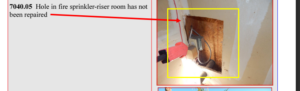
Annotated reinspection photo documenting holes still visible on the stucco parapet wall (south elevation of roof).
Why Photo-Based Documentation Beats Text-Only Reports
A lot of reports are just words. Words are useful, but words alone cause problems:
People interpret them differently
People argue about what the inspector “meant”
People forget locations
People dispute whether repairs were actually completed
My reports are built around annotated proof, including:
Arrows / boxes / callouts showing the exact defect
A short explanation in plain English
The specific location (roof elevation, room, exterior wall, unit #, etc.)
Next-step guidance: monitor, repair, or consult a specialist
Example (like your photo)
A reinspection photo may show holes still visible on a stucco parapet wall along the south elevation of the roof. The image is marked so everyone sees the same issue—no guessing, no “I don’t see it,” no endless texting back and forth. It’s either there, or it’s not. That’s the power of annotated documentation.
Who This Report Is For
This service is ideal for:
Buyers
You want to understand what you’re buying—before you sign. A strong report gives you documentation for negotiations and a practical plan for post-close repairs.
Sellers
You want fewer surprises, fewer last-minute credits, and less deal drama. Documenting issues and fixes helps buyers feel confident.
Brokers & Agents
You need clarity, speed, and clean communication. A visual report reduces misunderstandings and keeps deals moving.
Property Managers & Landlords
You need actionable repair lists, scope clarity, and reinspection proof for vendor accountability.
Investors
You want to reduce unknowns, forecast repair costs, and prioritize repairs that protect the building.
Contractors & Trades
You want photos, exact locations, and clear descriptions—so you can quote accurately without five site visits.
Residential vs Commercial: What Changes?
The method is consistent: document, label, prioritize, recommend next steps. The scope changes based on property type.
Residential inspection report focus areas often include:
Roof condition, flashing, penetrations
Exterior stucco, trim, siding, sealing points
Signs of water intrusion (stains, soft drywall, baseboard swelling)
Plumbing leaks, fixture function, water heater observations
Electrical panel observations, outlets/switches, lighting function
Doors/windows, drywall damage, safety concerns
Attic/garage observations (as accessible)
Commercial inspection report focus areas often add:
Roof perimeter/parapet conditions and drainage patterns
Larger HVAC systems and visible ducting issues
Multi-tenant spaces: unit-by-unit photo documentation
Parking lot, site drainage, and exterior safety observations
ADA-related visual concerns (non-certified observations, clearly labeled)
Recurring maintenance patterns and deferred repairs
Same mission in both cases: clear documentation + prioritized action list, supported by photos that are easy to share.
What You Receive: Deliverables That People Actually Use
Every inspection report includes:
1) Photo library with labeled notes
Each finding is photographed and labeled so it’s easy to share with owners, agents, contractors, and managers. Photos are the “truth anchors” of the report.
2) Repair punch list
A practical list of what to fix first, what can wait, and what to monitor. This helps you budget and plan instead of reacting.
3) Reinspection photos (optional / by request)
If repairs were supposed to be completed, I can return and document what’s actually done—and what’s still present. This is especially useful for roofs, stucco repairs, leak repairs, and “patch jobs” that didn’t hold.
4) Contractor-ready detail
When possible, notes include measurable details: approximate affected areas, materials involved, and visible failure points—so you can get accurate bids.
5) A report that reads cleanly
This sounds small, but it matters: the report is structured so someone can skim it quickly, understand it immediately, and take action without decoding technical language.
The Inspection Process: How It Works
Here’s the typical workflow:
Step 1: Scheduling & scope confirmation
You tell me:
Property type (commercial / residential)
Address and access details
Deadline (inspection/escrow timeline)
Any known concerns (leaks, roof repairs, stucco patching, prior “fixes,” etc.)
Whether you want reinspection documentation
Step 2: On-site inspection & documentation
I document what’s visible and accessible. I take photos of:
Defects and concerns
Areas prone to failure (especially water entry points)
Evidence of prior repairs and patching
Any safety or functional issues observed
Step 3: Annotating and organizing
Photos are labeled and grouped in a way that makes sense for the property:
Roof/exterior first (often the biggest risk area)
Interior/rooms or tenant spaces
Mechanical/plumbing/electrical observations
Priority items and recommended next steps
Step 4: Report delivery
Most reports are delivered same day or next day, depending on size and access. Larger properties take longer simply because documentation volume increases.
Common Findings We Document (Especially Roofs & Exteriors)
If there’s one area that causes the most expensive surprises, it’s the building envelope: roof + walls + drainage + sealing points.
Common items documented include:
Stucco cracks, delamination, patch failures, parapet wall holes
Roof penetrations and patching issues
Missing sealant, failing flashing, open terminations
Ponding evidence and drainage concerns
Water intrusion stains and damaged drywall/baseboards
Repairs that didn’t hold (“fixed”… but still failing)
These findings aren’t about being dramatic. They’re about preventing the classic cycle: small leak → hidden damage → mold risk → drywall/flooring removal → expensive rebuild.
Detailed Inspection Areas We Commonly Cover
Below is a deeper look at what we typically document. The exact scope depends on property type, access, and the purpose of the report.
1) Roof & rooftop components
Roofs don’t fail politely. They fail in ways that show up as stains, smells, bubbling paint, warped baseboards, and tenant complaints.
We commonly document:
Roof surface condition (as visible)
Flashing conditions at edges and transitions
Penetrations (vents, pipes, skylights, equipment supports)
Parapet wall conditions and stucco termination issues
Drainage patterns and evidence of ponding
Patch repairs and suspected weak points
Reinspection value: Roof repairs are one of the most common “allegedly completed” items. Reinspection photos make it clear whether patching was done properly and whether open points remain.
2) Exterior walls, stucco, and sealing points
Stucco and exterior finishes are protective systems. When they crack, detach, or have open holes, water finds a path.
We document:
Cracks, separation, delamination, and patch quality
Missing or failing sealant at joints and transitions
Exposed substrate or soft/damaged areas (where visible)
Problem areas around windows/doors and roof-wall intersections
Parapets and roofline termination details
Example: holes still visible in a parapet wall stucco area along a roof elevation—annotated and location-labeled so it can’t be misunderstood.
3) Windows, doors, and intrusion pathways
Doors and windows are common leak points and energy loss points.
We document:
Visible gaps, damaged seals, or misalignment
Water staining around frames or below sills
Swollen trim/baseboards near openings
Signs of previous patching or recurring moisture
4) Interior walls, ceilings, and flooring condition
Interiors tell stories. Stains, textures, and warping often point to a bigger issue.
We document:
Water stains, bubbling paint, soft drywall areas
Cracks (noting pattern and location)
Flooring damage consistent with moisture (buckling, swelling, discoloration)
Baseboard damage or separation
5) Plumbing observations
Plumbing failures are common, especially in older properties or properties that have been vacant.
We document:
Active leaks (visible) and signs of prior leaks
Fixture condition: faucets, valves, toilets, supply lines (visual)
Water heater observations (age/condition indicators, pan/drain presence where visible)
Drainage concerns (slow drains noted if observed during use)
6) Electrical observations (visual, non-invasive)
Electrical issues can be safety issues. Documentation helps prioritize qualified evaluation.
We document:
Visible damage to fixtures or covers
Panel area observations (labeling clarity, visible corrosion, access)
Loose outlets/switches, non-functioning lights (if tested)
Any obvious safety hazards observed
Note: Any recommendation involving electrical typically includes “evaluate by a licensed electrician” where appropriate. The report stays honest and responsible.
7) HVAC and mechanical observations (commercial and residential)
HVAC problems often show up as comfort complaints, high bills, or moisture issues.
We document:
Visible condition of equipment (as accessible)
Signs of poor drainage/condensate issues
Filter condition observations (if accessible)
Ducting damage or disconnections (visible)
Commercial properties may include rooftop units, multiple zones, or tenant-specific equipment. Documentation helps owners plan maintenance and repairs without guessing.
8) Site conditions (mostly commercial, sometimes residential)
Exterior site conditions affect safety, drainage, and liability.
We document:
Trip hazards and damaged walking surfaces (visual notes)
Drainage patterns around the building
Water pooling near foundations (if observed)
Exterior lighting issues (if observed during access)
Reinspection Photos: The “Proof” Service That Saves Arguments
Reinspection photos are one of the most valuable add-ons because they answer one question:
Was the repair actually completed, and does it look complete?
This is common in:
Roof repairs and patching
Stucco patch repairs and parapet repairs
Leak repairs (where the “source” was supposedly fixed)
Drywall repairs after water damage
Exterior sealing and flashing adjustments
A re inspection is not about blaming anyone. It’s about confirming reality with documented evidence so the buyer, seller, or owner can move forward confidently.
Priorities: How We Label Urgency (So You Know What Matters First)
Not everything is an emergency. A good report helps you focus.
We typically organize findings in practical categories such as:
Priority / Safety / Active leak risks (address quickly)
Recommended repairs (prevent future failure)
Maintenance items (protect lifespan and reduce future costs)
Monitor items (documented, but not urgent today)
This structure helps you budget and plan without panic.
Turnaround Time
Most reports are delivered same day or next day, depending on:
Property size
Number of units/spaces
Access complexity
Amount of photo documentation required
Whether you requested a reinspection or multiple phases
Commercial properties with multiple units naturally take longer due to documentation volume. The goal is speed without sacrificing clarity.
Pricing: What Affects Cost (Without Guessy Numbers)
Pricing depends on:
Property type (commercial vs residential)
Square footage and number of rooms/units
Travel and access requirements
Depth of documentation needed (basic vs very detailed)
Reinspection add-on
Deadline urgency (same-day rush vs standard)
Fastest way to get an accurate quote: text the address + property type + deadline to 702-752-0758.
What I Need From You Before The Visit
To make the inspection efficient, send:
Property address
Gate/lockbox/access instructions
Any inspection deadlines (escrow dates)
Any known problem history (leaks, roof repairs, stucco patching, recurring stains)
Whether you want reinspection photos
For commercial: unit list, who has access, and any restricted areas
More context upfront = cleaner report and fewer surprises.
Important Note (Clean, Professional Disclaimer)
This report is a property condition documentation report based on visible and accessible areas at the time of visit. It does not guarantee concealed conditions and does not replace required third-party certifications or licensed specialty inspections. If your transaction requires a state-licensed home inspection, you should also hire a licensed home inspector. Where appropriate, the report may recommend evaluation by licensed specialists (roofing, plumbing, electrical, HVAC, structural, etc.).
The report is designed to be visual, clear, and actionable—so decisions can be made with confidence.
Schedule Your Inspection Report
If you’re buying, selling, managing, or verifying repairs, get documentation you can actually use.
Call/Text: 702-752-0758
Or use the contact form to request an appointment.
If an inspection reveals a broken window, vandalism, or an unsecured vacant property, see our Emergency Broken Window Board-Up Service Las Vegas. Dedicated local emergency pages are also available for Henderson, North Las Vegas, and other Southern Nevada service areas.
FAQs
Do you do commercial and residential?
Yes—single-family homes, condos, small commercial buildings, tenant spaces, and multi-unit properties.
What are “reinspection photos”?
Photos taken after repairs were supposed to be completed, showing what changed and what’s still present.
Can you focus on one area only (roof, stucco, water damage)?
Yes. A targeted report is often the fastest way to confirm a specific concern.
Do you provide repair estimates?
I can provide budget-range repair guidance when requested, but the report’s main goal is accurate documentation and priorities.
How do I receive the report?
Typically as a PDF with embedded photos and clear labeling.
What do you need from me before you arrive?
Property address, access instructions, and any specific concerns (leak history, prior repairs, escrow deadlines).
How fast can you deliver?
Often same day or next day, depending on size, access, and documentation volume.
Are you a licensed home inspector?
This service is property condition photo documentation. If your transaction requires a state-licensed home inspection, you should also hire a licensed inspector.
Internal Links (Add If These Pages Exist)
Contact:
/contact/