
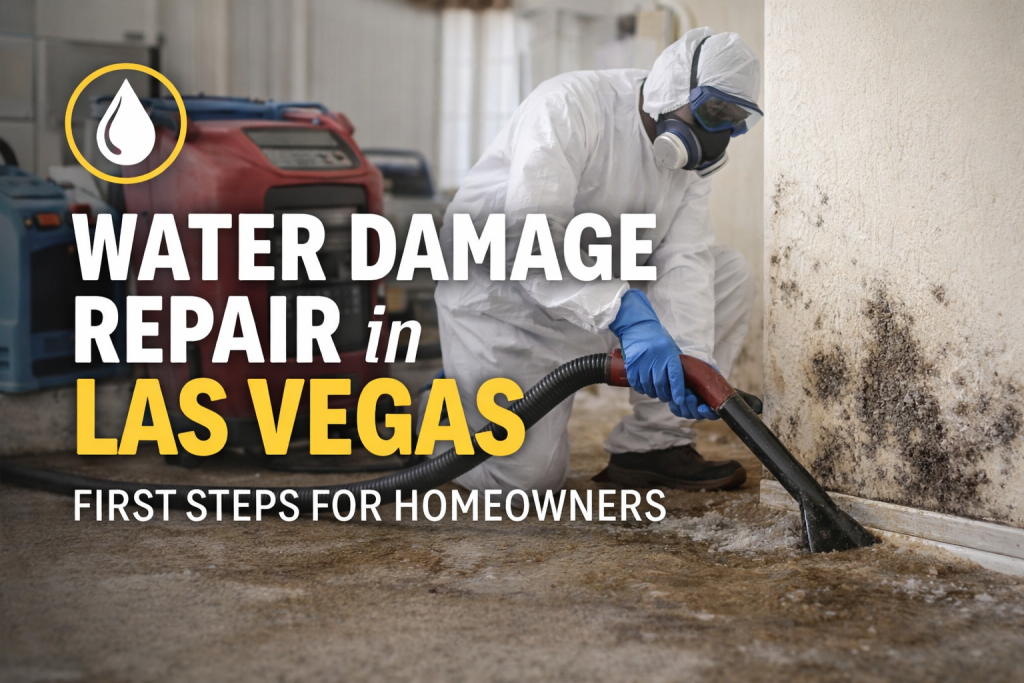
Water damage repair in Las Vegas may seem unlikely in the desert. However, indoor water damage poses a more common threat than flash floods. A burst pipe, leaking appliance, or hidden wall leak can turn into a homeowner’s nightmare faster than expected.
In fact, water spreads quickly, soaking into carpets, walls, and furniture within minutes. The real danger? Mold can start growing within 24 to 48 hours. Every minute counts when dealing with water damage that homeowners in Las Vegas face. This guide explores the critical first steps, explains why professional water damage cleanup Las Vegas services matter, and outlines what to expect during water damage restoration Las Vegas processes.
The Las Vegas “Triple Threat”: Why We’re at Risk
Why does a desert city have so many water damage calls? Southern Nevada has a specific set of environmental factors that create a “triple threat” for homeowners.
Slab Leaks: The Silent Foundation Killer
Most Las Vegas homes are built on concrete slabs. Our desert soil contains “expansive clay” that swells when wet and shrinks when dry. This constant movement, combined with extreme temperature swings (105°F in summer to 30°F in winter), puts immense stress on the copper pipes buried beneath your floor. When these pipes crack, water can seep into your foundation for weeks before you notice a “warm spot” on your carpet or a spike in your Las Vegas Valley Water District bill.
Hard Water Corrosion
Las Vegas has some of the hardest water in the United States. High mineral content (calcium and magnesium) leads to significant scale buildup inside your pipes, water heater, and appliances. Over time, this “calcification” causes valves to fail and pipes to corrode from the inside out, leading to pinhole leaks.
AC Condensation Overload
In July and August, your Air Conditioning unit works overtime. It removes humidity from the air while cooling your home. This water is supposed to drain outside. However, in our dusty environment, drain lines often get clogged with “bio slime” and desert dust. When the line clogs, the water backs up directly into your ceiling or attic, leading to massive “ghost leaks” that can cause your ceiling to collapse.
The Critical “Golden Hour”: What to Do in the First 30 Minutes
When water begins to intrude into your home’s structure, the clock starts ticking. Water is invasive and it doesn’t just sit on the floor. It travels through “capillary action,” climbing up drywall, soaking into baseboards, and seeping under floorboards. Here is how you should handle the first half hour of the crisis.
1. Ensure Everyone’s Safety First
Before you worry about the carpets or the furniture, check on your family and pets. Standing water is a conductor. If water has reached electrical outlets or is dripping from a light fixture, the risk of electrocution is extreme. Furthermore, if the ceiling is sagging under the weight of trapped water, a collapse could be imminent. If the damage is extensive, evacuate the property immediately and wait for a professional assessment.
2. Locate and Stop the Water Source
If it is safe to move through the house, your primary goal is to “stop the bleed.”
- The Main Shut-off: Every Las Vegas homeowner should know where their main water shut-off valve is (usually located in a box near the street or where the main line enters the house). Turning this clockwise will stop all water flow to the property.
- Local Valves: If the leak is isolated to a toilet or sink, turn the small silver valve behind the fixture to the right.
- The Water Heater: In Las Vegas, the minerals in our “hard” water often cause water heaters to corrode and burst. Ensure you shut off both the water supply and the power/gas to the unit.
3. Kill the Power to Affected Areas
Water and electricity are a deadly combination. Head to your breaker box provided you can reach it without stepping in water. Flip the breakers for the rooms affected by the flood. If you cannot reach the box safely, do not attempt to be a hero. Call an electrician or your utility provider (NV Energy) to help with a remote shut off.
4. Document Everything Before You Clean
It is a natural instinct to start mopping immediately, but for insurance purposes, you need a “before” picture. Take high quality photos and videos of the standing water, the source of the leak, and any damaged personal property (electronics, rugs, furniture). This documentation is the “smoking gun” your insurance adjuster needs to process your water damage restoration claim in Las Vegas.
Why Professional Water Damage Cleanup is Essential
Many homeowners believe they can handle a leak with a few towels and a shop vac. While that might work for a spilled gallon of milk, it is woefully inadequate for a plumbing failure. Here is why professional water damage cleanup in Las Vegas is a non negotiable step.
1) Hidden Moisture: The Silent Structure Killer
Water is a master of disguise. It can seep behind a baseboard, travel down a wall stud, and settle in the subfloor. Even if your carpet feels dry to the touch after two days of running a household fan, the padding underneath could be a saturated sponge. Professionals use Thermal Imaging Cameras and Moisture Meters to “see” through walls and floors, identifying pockets of moisture that would otherwise lead to wood rot and structural failure months later.
2) The 24 Hour Mold Window
In the Las Vegas heat, mold doesn’t need weeks to grow. Mold only needs 24 to 48 hours to take hold because fungal spores are always present in your home’s air. Fungal spores are always present in the air. They just need a “food source” (like the paper on your drywall) and moisture to activate. Professional restoration teams apply hospital grade antimicrobials to surfaces. They ensure mold does not take root once the water disappears.
Read Also: Top 5 Signs Your Drywall Needs Immediate Repair
3) Industrial vs. Household Equipment
A standard household fan moves air around a room. An Industrial Air Mover used by restoration pros creates high velocity airflow across surfaces to accelerate evaporation. When coupled with LGR (Low Grain Refrigerant) Dehumidifiers, which remove gallons of moisture from the air per day, professionals can dry a home in a fraction of the time it would take using DIY methods.
Understanding the Las Vegas Restoration Process
If you call a professional service like Call 4 Handyman Las Vegas, what actually happens when they arrive? The process is scientific and follows a specific sequence.
Phase 1: Assessment and Categorization
Not all water is equal. Professionals categorize the loss to determine the safety protocol:
- Category 1 (Clean Water): From a broken supply line or rainwater.
- Category 2 (Gray Water): Contains some contaminants (e.g., dishwasher or washing machine overflow).
- And Category 3 (Black Water): Highly contaminated (e.g., sewage backup or stagnant water). This requires specialized biohazard suits and intense sanitization.
Phase 2: Water Extraction
The “bulk” water is removed using truck mounted vacuum systems. This is the most critical stage for preventing the water from migrating further into the home’s structure.
Phase 3: The Drying Phase
This is usually the loudest part of the process. For 3 to 5 days, high powered equipment will run 24/7 in your home. Technicians return daily to take moisture readings and ensure the project meets the specific “drying goal.” If the environment isn’t properly controlled, the humidity inside the house can actually cause “secondary damage” like peeling wallpaper or warped cabinets in rooms that weren’t even flooded.
Phase 4: Sanitization and Reconstruction
Once the structure is dry, it is cleaned and deodorized. If drywall or flooring had to be removed, the reconstruction phase begins. This involves hanging new sheetrock, painting, and installing new flooring to return your home to its pre-loss condition.
Protecting Your Las Vegas Home from Future Damage
Once the repairs are done, your goal shifts to prevention. The Las Vegas climate and infrastructure present unique challenges.
1) Manage Your Water Pressure
Las Vegas often has high municipal water pressure. While this makes for great showers, it puts immense stress on your pipes and hoses. Installing a Pressure Reducing Valve (PRV) can save your plumbing from premature failure.
2) Smart Leak Detection
You can install smart sensors under your sinks and near your water heater for a few hundred dollars. These devices connect to your Wi-Fi and send an alert to your phone the second they detect moisture. Some systems can even automatically shut off your main water valve if a leak is detected while you are at work or on vacation.
3) HVAC Maintenance
In the desert, our AC units work overtime. A clogged condensate drain line can cause water to back up and overflow into your attic or closet. Having a handyman flush your drain lines twice a year is a simple way to avoid a massive headache.
Read Also: Ultimate Home Maintenance Checklist for Las Vegas Weather
FAQs
1. How long does the water damage restoration process usually take?
For a standard room with moderate flooding, the drying process typically takes 3 to 5 days. However, the full restoration, including replacing drywall, painting, and installing new flooring, can take anywhere from two weeks to a month, depending on material availability and insurance approvals.
2. Will my homeowners insurance cover water damage in Las Vegas?
Yes, if the damage is “sudden and accidental,” such as a burst pipe or a failed appliance. However, insurance often denies claims related to “gradual damage” (like a slow leak you ignored for months) or “seepage” from the ground. Always review your policy for specific exclusions regarding floods and sewer backups.
3. Can I stay in my home during the restoration process?
It depends on the scale of the damage and the category of water. If the kitchen is being dried, you might stay in the bedrooms. However, the drying equipment is very loud and generates significant heat. If “Black Water” (sewage) is involved, you must evacuate for health reasons until the area is fully sanitized.
4. Is mold always a guarantee after a water leak?
Mold is not guaranteed if you act within the first 24 to 48 hours. If the area is professionally dried and treated with antimicrobials quickly, the risk of mold growth is extremely low. Mold only becomes a certainty when moisture is allowed to sit in dark, unventilated spaces for more than two days.
Conclusion
Water damage repair in Las Vegas is a race against time. While the desert sun shines outside, a hidden leak inside can compromise your home’s integrity and your family’s health. You can navigate the restoration process with confidence by prioritizing safety, stopping the source of the issue, and calling in the experts at Call 4 Handyman Las Vegas immediately.
Don’t wait for the musty smell of mold to tell you that you have a problem. At the first sign of moisture, take action. Your home is your biggest investment. Keep it dry, keep it safe, and keep Las Vegas strong.