
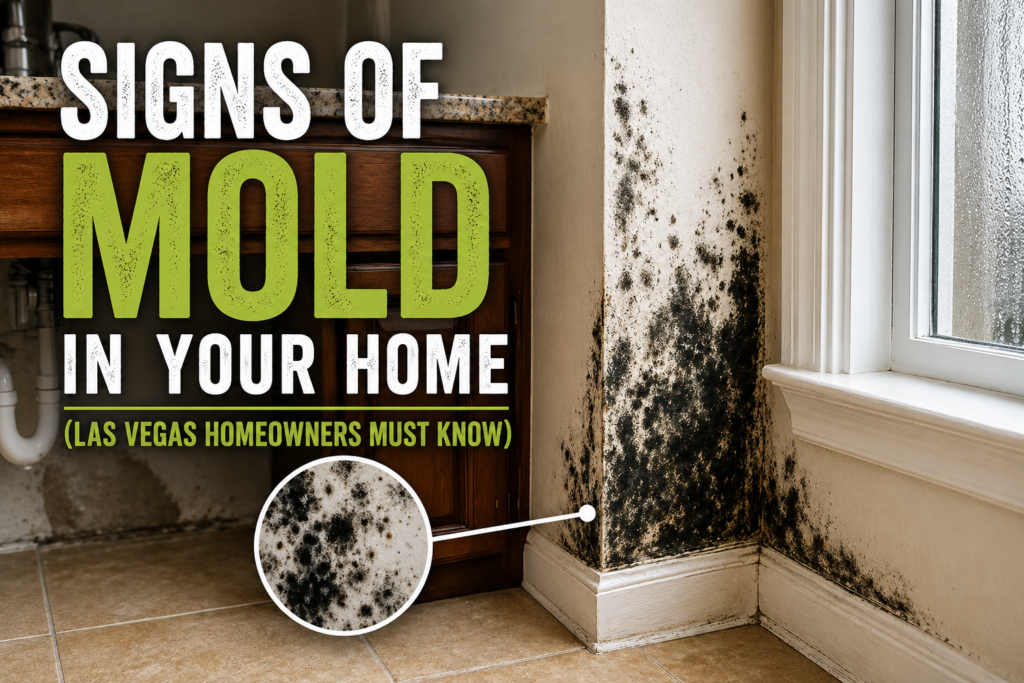
Many Las Vegas homeowners believe our dry, desert climate makes us immune to mold issues. Unfortunately, that is a dangerous misconception. While the Mojave Desert is arid, the interiors of our homes in Summerlin, Henderson, and across the valley often harbor the moisture needed for mold to thrive. Whether it’s an aging swamp cooler, a hidden plumbing leak, or condensation from a hard-working HVAC system, mold can take hold in as little as 24 hours. Understanding the warning signs is essential for protecting your property’s value and your family’s health. This article explores the specific signs of mold growth tailored to the unique Las Vegas environment and how to address them before they become a costly disaster.
The Las Vegas Mold Myth: Why Dry Air Doesn’t Mean No Mold
It is a common sight to see locals shrug off the threat of mold because “it’s too dry here.” However, mold doesn’t care about the humidity in the Red Rock Canyon; it cares about the moisture behind your bathroom wall or under your kitchen sink. In Las Vegas, we rely heavily on man-made moisture sources. Evaporative coolers (swamp coolers) add moisture to the air, and our air conditioning units produce significant condensation during the scorching summer months.
When these systems fail or aren’t maintained, they create a tropical microclimate inside your desert home. Because we spend 90% of our time indoors during the peak of summer, indoor air quality is paramount. Ignoring the signs of mold can lead to long-term structural damage and chronic health issues that are often mistaken for seasonal “Vegas allergies.”
Signs of Mold Every Las Vegas Homeowner Should Know
Mold can grow silently in your home, often going unnoticed until it becomes a serious problem. Knowing the early warning signs can help Las Vegas homeowners act quickly and prevent costly damage.
1. The Unmistakable Musty Odor
One of the earliest indicators of mold is a persistent, earthy, or musty smell. Often described as the “wet sock” or “attic” smell, this odor is caused by gases released by mold as it grows. In a Las Vegas home, you might notice this smell most strongly when you first turn on your AC or swamp cooler. If the scent persists even after a deep clean, it’s likely that mold is growing in a hidden area, such as inside your ductwork or behind the drywall near a window frame.
2. Visual Cues: Beyond the “Black Spot.”
Mold in the valley can appear in various colors, including olive green, brown, gray, and even white. Look for fuzzy patches or slimy spots on walls, baseboards, and ceilings. In bathrooms, mold often appears as dark stains in the grout lines or behind the caulking. Additionally, if your drywall feels soft, looks “bubbly,” or if the paint is peeling, there is likely moisture trapped behind the surface, providing a perfect environment for mold to colonize.
3. Health Symptoms and “Vegas Allergies.”
Many residents attribute sneezing, coughing, and itchy eyes to desert dust or seasonal pollen. However, if your symptoms improve when you leave the house and worsen when you’re inside, you might be reacting to mold spores. Common health signs include chronic sinus congestion, unexplained skin rashes, wheezing, and frequent headaches. For seniors and those with compromised immune systems—a large portion of our community in Sun City and Anthem—mold exposure can be particularly hazardous.
4. A History of Water Damage or Leaks
If you’ve recently dealt with a burst pipe, a leaking water heater, or minor flooding during a monsoon season flash flood, the clock is ticking. Even if you “dried it up” with towels, moisture often seeps into the subflooring or the insulation inside the walls. Check for yellow or brown “rings” on the ceiling or warped baseboards, as these are clear indicators of moisture and likely mold.
Read Also: Water Damage vs. Mold
5. Increased Indoor Humidity and Condensation
Las Vegas homes are built to be airtight to keep the heat out, but this can also trap moisture. If you notice your windows “sweating” or see beads of water on your bathroom walls after a shower, your ventilation may be inadequate. This standing moisture is an open invitation for mold.
The Risks of DIY Mold Removal
When homeowners spot a small patch of mold, their first instinct is often to grab a bottle of bleach. However, bleach is ineffective on porous surfaces like drywall; it kills the surface mold but leaves the “roots” intact.
Furthermore, scrubbing mold releases millions of spores into the air, which can then settle in your carpet or HVAC system. Professional remediation involves containment, HEPA filtration, and specialized antimicrobial treatments that ensure the mold is gone for good.
Read Also: Mold Removal in Las Vegas
Mold and Your Home’s Resale Value
The Las Vegas real estate market is fast-paced, and nothing kills a deal faster than a “failed” home inspection due to mold. Buyers are often spooked by the word “mold,” leading to reduced sale prices or deal cancellations. By handling the repairs now with a trusted Las Vegas handyman, you can provide documentation that the issue was professionally addressed, protecting your property’s value.
Tenant and Landlord Responsibilities in Las Vegas
If you manage rental properties in Summerlin, Enterprise, or North Las Vegas, mold is a significant liability. Nevada law requires landlords to maintain a habitable dwelling, including keeping the property free of chronic dampness and mold growth that could endanger a tenant’s health.
When a tenant reports a leak or a musty smell, it is crucial to respond immediately. Ignoring a minor plumbing drip in a rental unit can lead to extensive structural damage and potential legal complications. For property managers, partnering with a reliable handyman in Las Vegas ensures that maintenance requests are handled quickly and professionally. At Call 4 Handyman, we provide the fast response times needed to document repairs and keep both your investment and your tenants safe.
How Call 4 Handyman Las Vegas Protects Your Home
At Call 4 Handyman Las Vegas, we understand the unique challenges of maintaining a home in the valley. We provide comprehensive solutions that go beyond a simple patch job:
- Water Damage Repair: Fast response to dry out affected areas and replace damaged materials.
- Drywall and Baseboard Replacement: Expert repairs that match your existing texture and paint perfectly.
- Plumbing Fixes: Addressing the root cause of the moisture to ensure mold doesn’t return.
- Swamp Cooler & HVAC Maintenance: Helping you keep your cooling systems clean and functional.
Conclusion
Mold is a silent intruder that doesn’t wait for a rainy day to strike in Las Vegas. You can catch mold early and minimize the damage by staying vigilant and watching for musty smells, visual changes, and unexplained health symptoms. Don’t let a small leak turn into a major health hazard. If you suspect mold or have water damage that needs immediate attention, trust the local experts who know Las Vegas homes best. At Call 4 Handyman, we are dedicated to providing reliable, fair-priced, and professional service to our neighbors across the valley.
Need help with repairs or suspect water damage? Contact Call 4 Handyman Las Vegas today at 702-752-0758 for a free estimate! We serve Summerlin, Henderson, Sun City, and the entire Las Vegas valley.
FAQs
1. Is mold common in Las Vegas despite the dry weather?
Yes. Indoor moisture from AC units, swamp coolers, and plumbing leaks creates an ideal environment for mold growth inside Las Vegas homes regardless of the outdoor humidity.
2. Can I just use bleach to kill the mold on my wall?
No. Bleach is not effective on porous materials like drywall. It often fails to kill the mold roots and can actually encourage growth by adding more moisture.
3. What is the most common sign of hidden mold?
A persistent musty or “earthy” odor is usually the first sign of mold growing behind walls, under floors, or inside your HVAC system.
4. Does homeowner’s insurance cover mold removal in Nevada?
If the mold resulted from a sudden, covered peril like a burst pipe, it might be covered. Mold due to long-term neglect is typically not covered.
5. How quickly does mold grow after a water leak?
Mold can begin to colonize and grow on damp surfaces in as little as 24 to 48 hours, making immediate repair critical.