
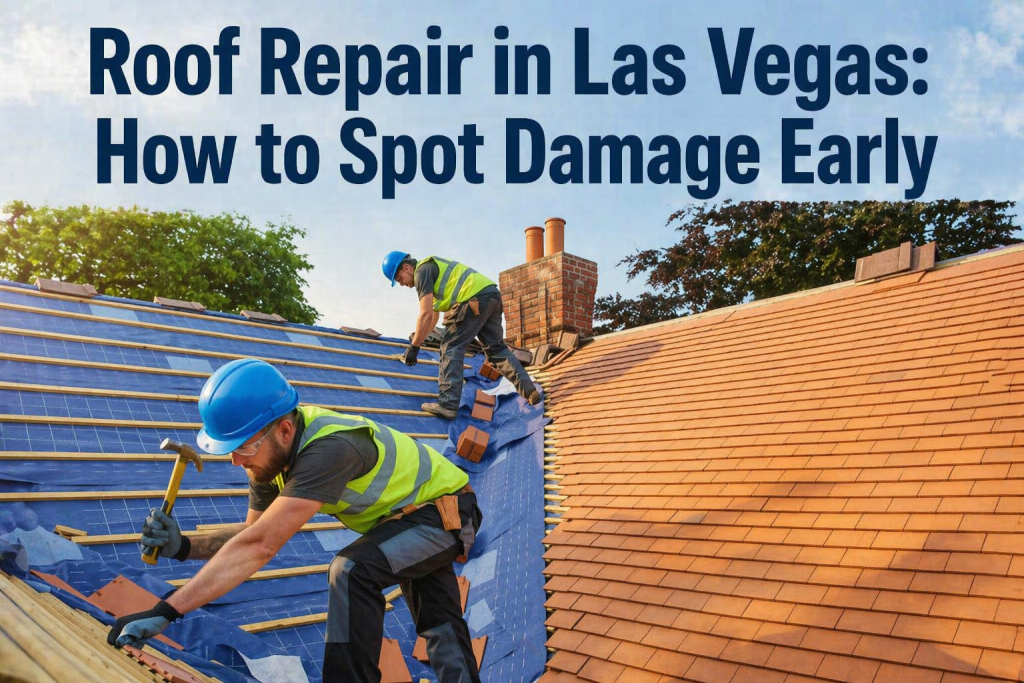
Roof problems rarely appear overnight. In many cases, small issues go unnoticed until they turn into expensive repairs. That’s why understanding roof repair in Las Vegas is so important for homeowners. Water damage is one of the biggest causes of roofing issues. If left unchecked, it can lead to mold, structural damage, and costly repairs. For roofing services, visit Presto Roofing LV.
The good news is that early detection can save you thousands. In fact, a well-maintained roof can last up to 30% longer than a neglected one. This article explores how to spot roof damage early in the Las Vegas valley, why the desert climate is so harsh on your home, and how local experts can help you protect your investment.
Warning Signs You Need Roof Repair in Las Vegas
You don’t need to be a professional contractor to spot early signs of trouble. Use this checklist to inspect your home from the ground (using binoculars) or a safe vantage point.
1. Cracked, Broken, or Missing Tiles
For tile roofs, this is the most common issue. Even a single cracked tile can allow water to reach the underlayment. In Las Vegas, high winds often cause “slipped” tiles, where the tile slides down the roofline, exposing the gap at the top.
What to look for: Look for uneven lines in your tile pattern or visible pieces of broken tile in your yard or gutters.
2. Curling or Buckling Shingles
If you have an asphalt shingle roof, look at the edges. Are they curling upward or “clawing” downward? This is a clear sign of heat exhaustion. When shingles lose their flexibility, they become brittle and can easily snap off during a windstorm.
What to look for: Shingles that look “distorted” or aren’t laying flat against the roof.
3. Granule Loss (The “Sand in the Gutter” Problem)
Asphalt shingles are coated with ceramic granules to protect them from the sun. As shingles age and bake in the Vegas sun, these granules loosen and wash into your gutters.
What to look for: Check your downspouts after a rain or look inside your gutters. If you see what looks like dark sand or coarse coffee grounds, your shingles are reaching the end of their lifespan.
4. Water Spots on Interior Ceilings
This is the most obvious sign, but it’s often spotted too late. A small yellow or brown “ring” on your ceiling indicates a slow leak. In Las Vegas, these leaks often start around “penetrations” like your AC unit, vent pipes, or skylights.
What to look for: Discoloration on the ceiling or walls, especially in the corners of rooms or near the attic access.
5. Light Shining Through the Attic
If you have a traditional attic space, go up there during the day with the lights off. If you can see “pinpricks” of daylight through the roof boards, you have a hole. Where light can get in, water can get in.
What to look for: Any visible light through the rafters or roof deck.
6. Sagging Rooflines
A sagging roof is a sign of structural distress. This could be caused by long-term water damage that has rotted the wooden rafters or the roof deck (OSB/plywood). In some cases, it might be due to the weight of heavy tile roofs if the house wasn’t properly reinforced.
What to look for: Stand back from your house and look at the ridge line (the very top). It should be a straight, sharp line. If it dips in the middle, you need an immediate inspection.
7. Damaged or Rusted Flashing
Flashing is the metal material used to direct water away from critical areas of the roof, like chimneys and vents. In Las Vegas, the intense heat can cause the sealant around flashing to dry out and crack.
What to look for: Rusted metal or “peeling” sealant where the roof meets a wall or chimney.
The Las Vegas Climate: A Silent Roof Killer
Las Vegas climate conditions create unique challenges that accelerate roof deterioration faster than moderate climates.
1) Extreme Heat Damage
Temperatures exceeding 100°F impose severe stress on roofing materials through constant expansion and contraction cycles. This thermal cycling causes asphalt shingles to crack, warp, and lose protective granules. UV radiation breaks down chemical bonds in roofing materials, making asphalt shingles brittle and causing membranes to dry out and crack.
Temperature swings from 65°F mornings to 105°F afternoons create continuous material stress. Consequently, heat-weakened areas split open during heavy rain and allow moisture penetration.
2) Wind and Storm Damage
Winds exceeding 45 mph cause minor roof damage, while gusts over 60 mph typically produce severe damage. High winds lift, loosen, or tear shingles completely away, leaving underlayment exposed.
Hailstorms crack or dent shingles and knock off protective granules, reducing shingle lifespan. Heavy rainfall overwhelms drainage systems, causing water to pool on flat roofs and increasing leak risks. Flying debris punctures or tears roofing materials during severe storms.
Why Early Detection of Roof Repair Saves You Thousands
In the home improvement world, there is a saying: “An ounce of prevention is worth a pound of cure.” This couldn’t be truer for roof repair in Las Vegas.
If you catch a cracked tile today, the repair might cost a few hundred dollars. If you wait until that crack allows the underlayment to rot and the plywood below to warp, you could be looking at a multi-thousand-dollar restoration project involving drywall repair, mold remediation, and a partial roof replacement.
Furthermore, keeping your roof in good shape improves your home’s energy efficiency. A damaged roof can allow heat to seep into your attic, forcing your AC to work harder during the 110-degree summer months.
Read Also: Top 5 Signs Your Drywall Needs Immediate Repair
How to Inspect Your Roof for Damage
Regular inspections catch problems before they escalate into expensive Las Vegas roof repair projects. Conducting routine checks, especially after extreme weather, helps homeowners identify damage early.
You can also watch this helpful roof inspection video for a quick visual guide: Climb to the Top with Expert Roofing Work!
1) Start with a Ground-Level Check
Walk completely around the home using binoculars to examine the roof from every angle. Look for moss, algae, and debris piles that trap moisture against shingles, causing premature deterioration. Dark streaks indicate algae growth feeding on limestone filler in asphalt shingles. Scan for missing, cracked, or curled shingles, along with dark patches suggesting moisture damage or sagging areas signaling structural problems. Check fallen shingles or debris on the ground near the foundation.
2) Inspect Your Attic for Warning Signs
Attic spaces reveal hidden roof damage invisible from outside. Using a flashlight, examine rafters and roof decking for water stains, dark spots, or discoloration indicating past or present leaks. Look for mold growth, musty odors, and damp insulation. Sunlight peeking through the roof boards confirms holes requiring immediate attention. Rusty nails poking through the deck indicate persistent moisture problems.
3) Check Gutters and Drainage Systems
Clean gutters of leaves, branches, and debris that prevent proper drainage. Inspect for sagging sections, leaks, or rust. Shingle granules accumulating in gutters signal advanced wear. Check downspouts for blockages and verify water drains away from the foundation.
4) Examine Flashing Around Chimneys and Vents
Flashing redirects water from vulnerable roof penetrations. Inspect metal components around chimneys, vents, and skylights for rust, dents, gaps, or brittle caulk. Damaged flashing allows water into the roof’s interior structure, causing rot.
When to Call a Professional for Roof Repair in Las Vegas
While some homeowners feel comfortable climbing a ladder, it’s often safer and more effective to hire a professional. A local handyman in Las Vegas who understands the specific architecture and climate of the valley is your best resource.
At Call 4 Handyman Las Vegas, we specialize in identifying these early warning signs. We don’t just “patch” problems; we look for the root cause to ensure your home stays dry through the next monsoon season.
Whether you’re in Summerlin, Henderson, or North Las Vegas, our team provides:
- Emergency leak repairs
- Tile replacement and realignment
- Shingle repair and maintenance
- Inspection for property managers and landlords
FAQs about Las Vegas Roof Repair
1) How often should Las Vegas homeowners inspect their roofs?
Schedule professional inspections twice yearly during spring and fall. Additionally, inspect within 24-48 hours after severe weather events, particularly following winds exceeding 50 mph or hailstorms.
2) When should I repair versus replace my roof?
Roofs under 15 years old with localized damage typically need repairs only. However, if repair costs reach 30% of replacement expenses, or if asphalt shingles exceed 20-25 years, replacement becomes the better investment.
3) What does roof repair in Las Vegas typically cost?
Minor repairs addressing isolated damage range from $300 to $3,000. Costs depend on the extent of damage, the materials needed, and accessibility. Multiple recurring leaks or widespread damage indicate the roof needs repair beyond simple fixes.
4) How long do roof repairs take?
Most repairs are completed within 1 to 3 days. Minor fixes like replacing shingles or sealing flashing take hours, while extensive repairs requiring structural work need several days.
5) What’s the best season for roof repair in Las Vegas?
Fall and spring offer moderate temperatures ideal for roofing work. Avoid summer when extreme heat makes materials difficult to handle and creates dangerous working conditions for contractors.
Conclusion: Protect Your Las Vegas Home Today
Your roof protects your home from harsh desert conditions. A quick seasonal check can help you spot issues like cracked tiles, curling shingles, or water stains before they turn costly. Don’t wait for the first storm of the season to find out your roof is failing. If you suspect your home has suffered UV damage or wind-related wear and tear, give the experts a call.
Looking for a trusted handyman in Las Vegas? Call 4 Handyman Las Vegas at 702-752-0758 for a free estimate and keep your roof in top condition.