
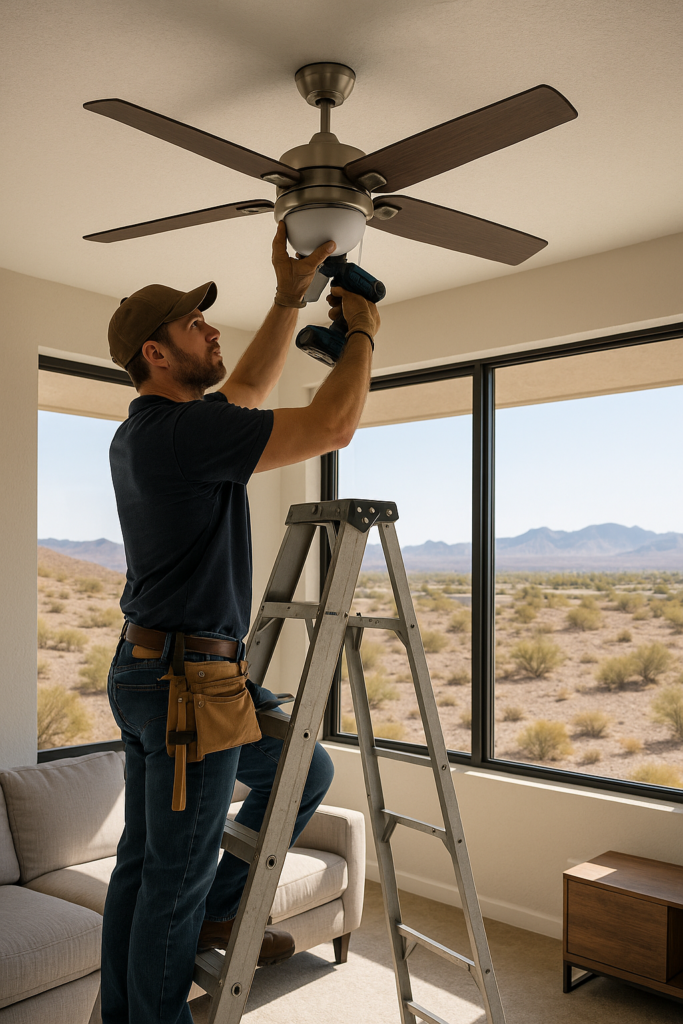
Swapping a ceiling light for a fan is one of the most popular upgrades in Henderson homes. It looks like a simple swap, since the wires are already there. But a ceiling fan is heavier than a light, it moves, and it may need different controls. Here is what has to be checked or changed before a fan goes up where a light used to be.
Replace Light Fixture with Ceiling Fan: What to Expect
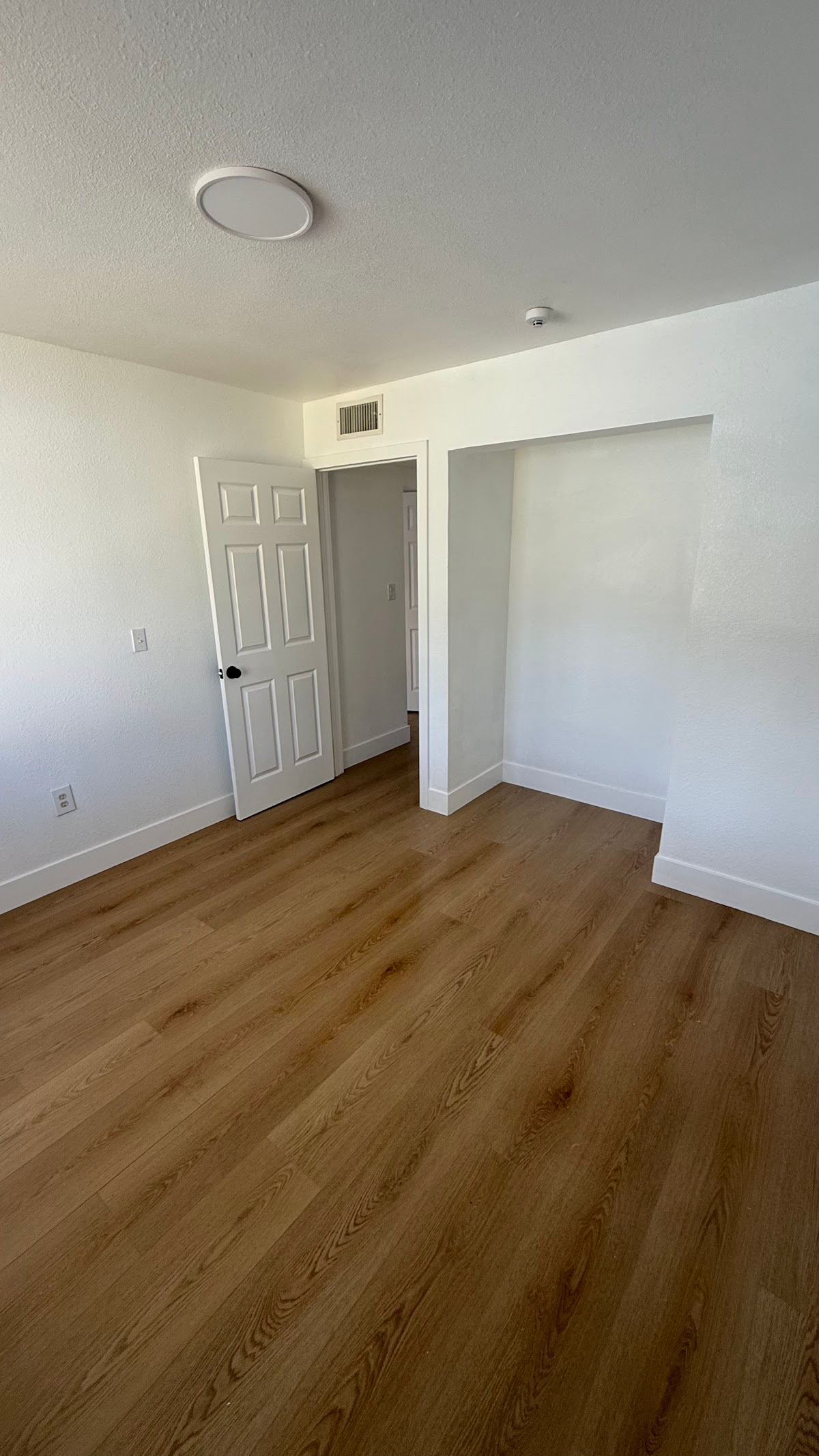
Call 4 Handyman handles requests for replace light fixture with ceiling fan and related work. Send photos or call 702-752-0758, and we will review the job, explain your options, and give you a written estimate before any work begins. Larger projects can require a permit, so it is worth checking the building requirements with the City of Henderson before you start.
1. The ceiling box must be fan-rated
This is the most important part. Most boxes installed for light fixtures are only rated to hold a light. A fan weighs more and puts a constant twisting and shaking load on the box. A box that is not rated for a fan can work loose over time, and the fan can fall.
- Look inside the box for a label that says it is acceptable for fan support.
- If it is not fan-rated, it has to be replaced with a fan-rated box or a fan brace that spans between the ceiling joists.
- Fan braces can usually be installed through the existing hole without opening the ceiling.
2. Is there enough height?
Fan blades should be at least 7 feet above the floor, and about 8 to 9 feet is ideal. On a standard 8-foot ceiling you need a flush-mount or hugger fan. On higher ceilings, a downrod brings the fan to a useful height. See vaulted ceiling fan installation for sloped ceilings.
3. Is the fan the right size for the room?
The old light did not need to match the room. The fan does. Check our ceiling fan size guide before you buy.
4. How will you control it?
A light usually has one wall switch. A fan has a motor and often a light, and there are a few ways to control both:
- One switch plus pull chains: the simplest, using the existing wiring.
- Remote or wall-mounted remote: a receiver in the fan canopy lets you control the motor and light separately without new wiring. Remotes are the most common choice for a light-to-fan swap.
- Smart fan or app control: works with the existing switch left on.
- Two separate wall switches: needs an extra wire between the switch and the ceiling. If it is not already there, adding it is electrical work that may require a licensed electrician.
Never use a standard light dimmer to control a fan motor. It can damage the motor.
5. Is the ceiling in good shape?
The fan canopy covers a small area. If the old fixture left a larger outline, stains or a hole, plan for a small drywall and paint touch-up around the box. If there are water stains, find the cause first. See ceiling water stains.
What a professional install includes
- Turning off the circuit and confirming it is dead.
- Removing the light and checking the box and wiring.
- Installing a fan-rated box or brace if needed.
- Assembling and hanging the fan at the right height.
- Connecting the wiring and any remote receiver.
- Balancing the blades and testing every speed, the light and the reverse function.
Related fan guides
Swap a light for a fan in Henderson
Send a photo of the current light, the ceiling height, and the fan you want through our estimate request form. See ceiling fan installation in Henderson, NV, or call 702-752-0758.