
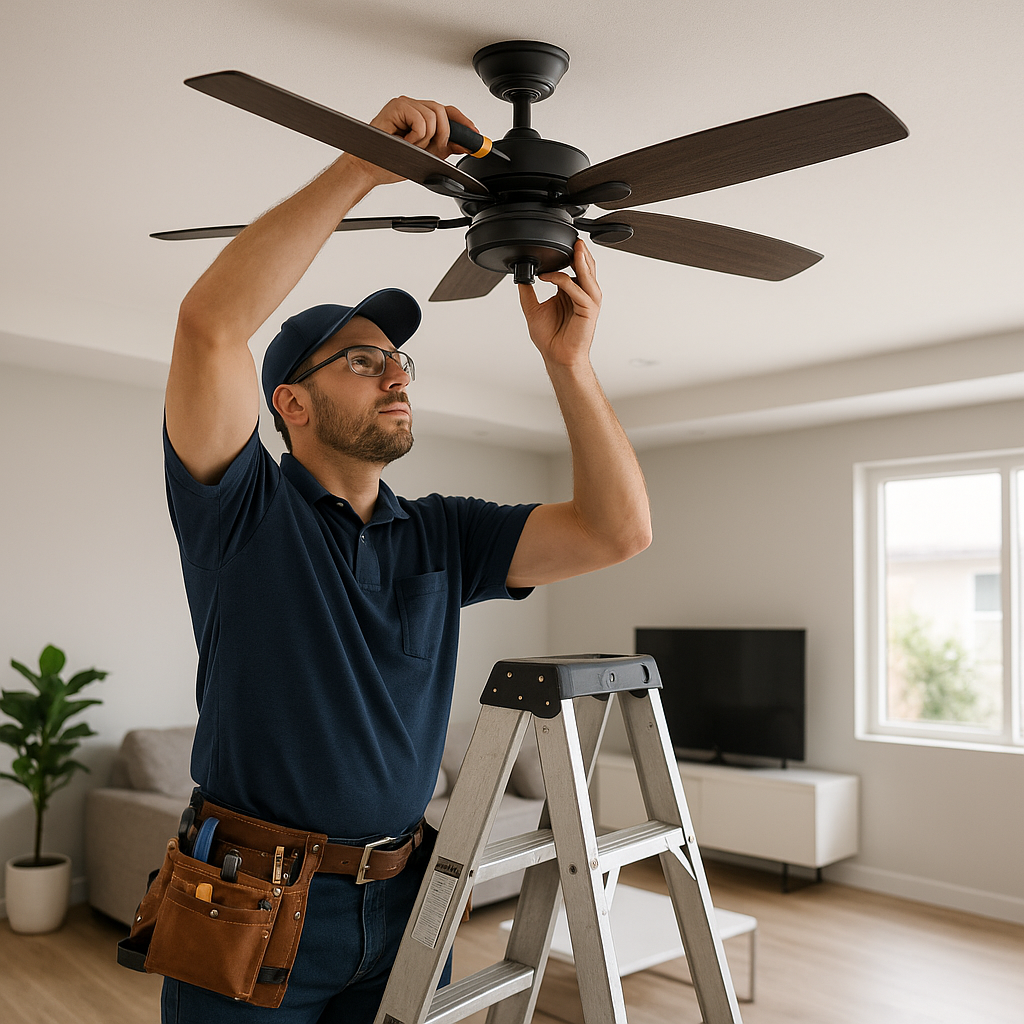
Before replacing an old ceiling fan in Henderson, check mounting support, control compatibility, ceiling height, and the replacement scope.
Replacing An Old Ceiling Fan: How the Job Works
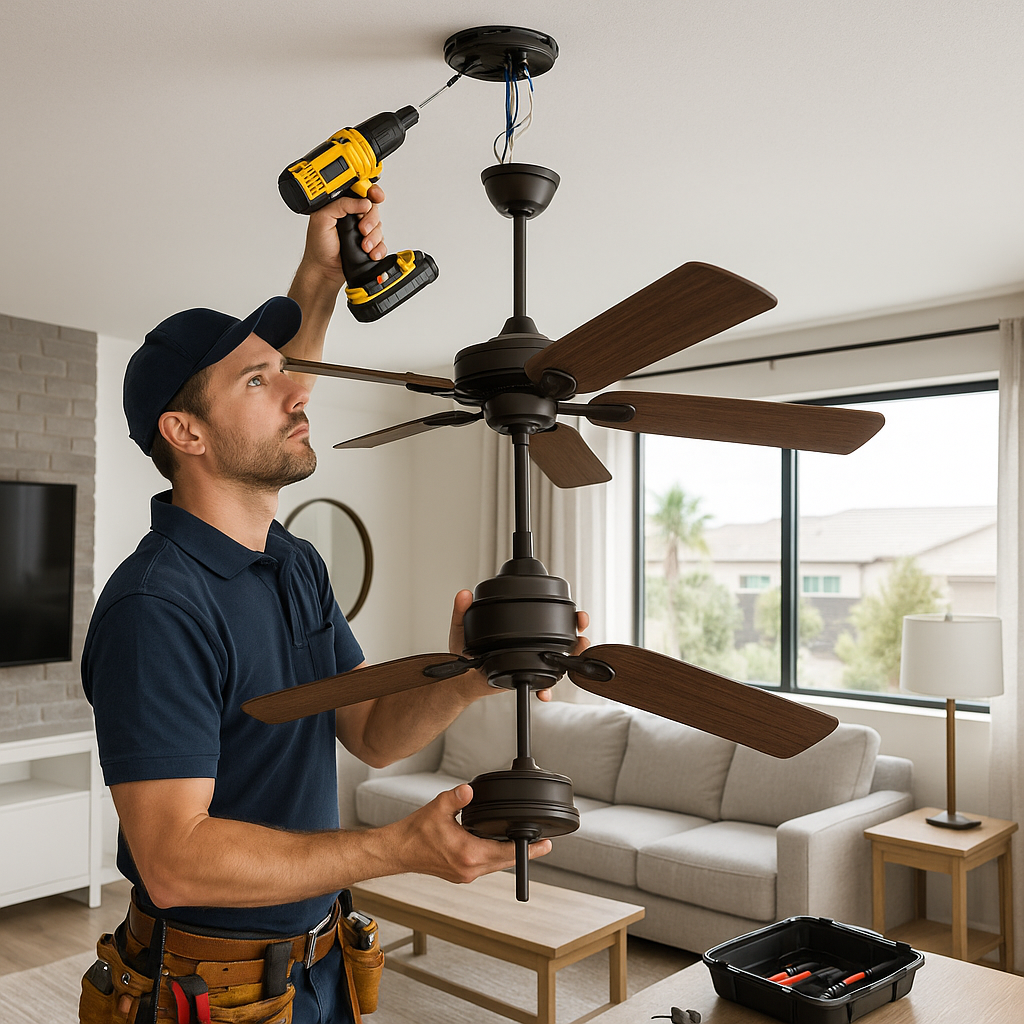
Call 4 Handyman handles requests for replacing an old ceiling fan and related work. Send photos or call 702-752-0758, and we will review the job, explain your options, and give you a written estimate before any work begins. Larger projects can require a permit, so it is worth checking the building requirements with the City of Henderson before you start.
For help with the work described here, see Henderson handyman services and our service directory. Send photos and project details through our estimate request form.
Replacing an older ceiling fan may look straightforward, but the condition of the existing ceiling box, wiring, mounting support, and controls determines the scope of the job. This guide helps Henderson homeowners understand the questions to ask before scheduling a replacement.
Is the existing ceiling box fan-rated?
A light-fixture box is not necessarily rated to support a moving ceiling fan. A qualified installer should verify that the box and its attachment are approved for the fan’s weight and movement. If the support is unsuitable, additional work may be necessary.
What about older wiring?
Existing wiring and wall controls should be assessed for compatibility with the new fan and applicable electrical requirements. Do not assume the previous installation was correct merely because the old fan operated.
Will the new fan fit?
Consider ceiling height, blade clearance, room size, and whether the fan needs a downrod or a low-profile mount. Follow the manufacturer’s clearance and installation requirements.
Remote controls and switches
Some fans use integrated receivers, dedicated controls, or compatible dimming systems. The installer should confirm that the selected control method works with the fan model.
Questions to ask before scheduling
- Is this a replacement in the same location or a new installation?
- Is the ceiling box confirmed fan-rated?
- Does the estimate include assembly, removal, disposal, and testing?
- Are there vaulted ceilings or difficult access conditions?
- Is additional electrical work needed?
Plan your Henderson ceiling fan replacement
For related home improvement help in Henderson, Las Vegas, and North Las Vegas, visit Call 4 Handyman or read our drywall repair information for ceiling finish concerns. Call 702-752-0758 to discuss your project.
What to Know Before Replacing an Old Ceiling Fan
Replacing an old ceiling fan is a quick upgrade that improves comfort, lighting and energy use. A few checks before you buy make the job go smoothly.
Signs It Is Time
- Wobbling or clicking noises
- Motor hum or slow speeds
- Light kit that flickers or fails
- Pull chains that broke or stick
- Dated look
Check the Electrical Box
Older fans are sometimes mounted to boxes that are not fan-rated. When replacing an old ceiling fan, we confirm the box is fan-rated and secured to framing, and replace it if needed.
Wiring and Controls
Newer fans may use remotes, wall controls or smart features. Some homes have a separate switch for the light and fan; others need a remote to control both.
Choosing the New Fan
Match blade size to the room, choose a DC motor for quieter, efficient operation, and pick an integrated LED light.
Disposal
We remove the old fan and haul it away.
For help replacing an old ceiling fan, call 702-752-0758.
Why Replacing an Old Ceiling Fan Makes Sense in Henderson
Ceiling fans work hard in Southern Nevada. Many run for months without a break from May through October. After 10 to 20 years, bearings wear, capacitors fail and the light kit becomes unreliable. Replacing an old ceiling fan restores airflow, cuts noise and usually lowers energy use, since newer motors use much less power than older ones.
Energy Savings From Newer Motors
Older fans use AC motors that draw more power, especially on high speed. Many new fans use DC motors that move the same or more air with a fraction of the electricity, run quieter and offer more speed settings. When the fan runs most of the year, that difference adds up.
Better Light
Many older fans have light kits with incandescent bulbs that add heat to the room. Integrated LED lights produce more light with less heat and often include dimming.
Safety
A fan that wobbles badly, sparks, smells hot or has cracked blades should be replaced, not patched. A fan mounted to the wrong type of box can work loose over time.
Signs It Is Time to Replace
- Grinding, clicking or humming noises that do not go away after tightening screws
- Wobble that returns after balancing
- Speeds that no longer change or a fan that only runs on one setting
- Lights that flicker or stop working even with new bulbs
- Pull chains that are broken or stuck
- Visible rust, cracked housings or warped blades
- A dated style that no longer fits the room
Planning: What to Check Before Buying
The Electrical Box
This is the most important step when replacing an old ceiling fan. The box in the ceiling must be rated for fan support and secured to framing or a fan brace. Some older homes have light-fixture boxes that were never meant to hold a spinning fan. If the box is not fan-rated, we install one before hanging the new fan.
Ceiling Height
- 8-foot ceilings need a low-profile or flush-mount fan
- 9-foot ceilings usually use the standard short downrod
- Taller and vaulted ceilings need a longer downrod and a sloped-ceiling adapter
Blades should sit about 7 to 9 feet above the floor for safety and good airflow.
Room Size and Blade Span
- Small rooms up to about 75 square feet: 29 to 36 inches
- Bedrooms and offices: 36 to 48 inches
- Large bedrooms and kitchens: 44 to 52 inches
- Living and great rooms: 52 to 60 inches or more
Controls
Decide how you want to control the fan:
- Pull chains for simple operation
- Wall control for fan and light
- Remote control
- Smart fan that works with an app or voice assistant
Some homes have two switches, one for the light and one for the fan, and some have one. We match the new fan’s control to your wiring or adjust the wiring when needed.
Step-by-Step: How We Handle Replacing an Old Ceiling Fan
1. Turn off power at the breaker and confirm with a tester.
2. Remove the old fan including the blades, motor, bracket and wiring connections.
3. Inspect the box and wiring. We check that the box is fan-rated and secured, and look for brittle or damaged wires.
4. Install a fan brace or new box if needed.
5. Assemble the new fan with the correct downrod for the ceiling height.
6. Mount and wire the fan to the box, including the ground and any receiver for a remote.
7. Attach blades and light kit and tighten every screw.
8. Balance the fan and test every speed, the reverse switch and the light.
9. Clean up and haul away the old fan and packaging.
Choosing a Fan for Las Vegas Homes
- Higher airflow (CFM) helps rooms that get afternoon sun
- DC motors for quiet operation and lower energy use
- Reverse function so you can push warm air down in winter
- Damp-rated fans for covered patios and bathrooms
- Wet-rated fans for areas exposed to rain or misters
- Sealed LED lights that keep dust out of the fixture
Common Problems When Replacing an Old Ceiling Fan
- Box not fan-rated. Fixed by installing a fan brace between joists.
- No ground wire. We follow safe practices and recommend electrical updates if needed.
- Wrong switch setup. Many fans need a remote or a different wall control.
- Uneven ceiling or slope. Solved with an angled mount or adapter.
- Texture damage around the canopy. We touch up the ceiling so the new canopy sits cleanly.
Should You Do It Yourself?
Some homeowners replace fans themselves. The job involves working overhead on a ladder, holding a heavy motor while connecting wires, and confirming the box can support the fan. If the box is not fan-rated, the ceiling is high, or the wiring is unclear, it is safer to have a professional handle it.
Caring for Your New Fan
- Dust blades every month or two; Las Vegas dust builds up fast
- Check and tighten screws once a year
- Switch direction seasonally: counterclockwise in summer, clockwise on low in winter
- Replace the remote battery when response slows
Room-by-Room Tips
Bedrooms
Quiet operation matters most. Choose a DC motor fan with a low speed that is nearly silent, and a remote so you can adjust it from bed. Dimmable light or no light at all keeps the room restful.
Living and Family Rooms
These rooms often have higher ceilings and get afternoon sun. A larger blade span with high airflow keeps the room comfortable and lets you set the thermostat a little higher in summer.
Kitchens
Kitchens benefit from fans with strong, even light and blades that are easy to wipe clean, since cooking grease collects on blades. Keep the fan clear of cabinet doors and range hoods.
Home Offices
A fan with several speeds and a remote helps you stay comfortable during long work days. Integrated LED light with a neutral color temperature reduces eye strain.
Patios
Outdoor fans must be damp- or wet-rated. If you have misters, choose wet-rated. Replacing an old ceiling fan outdoors is a good time to check the box and wiring for corrosion caused by dust and moisture.
Signs of Unsafe Wiring
During replacement we sometimes find problems in older homes:
- Wires with cracked or brittle insulation from years of heat from incandescent bulbs
- Loose wire nuts or connections wrapped only in tape
- Scorch marks inside the box
- A box that moves when pushed
When we find these, we explain the issue and the repair before going further. Fixing them during the swap is easier than coming back later.
Combining Fan Work With Other Repairs
Because we are already on a ladder with the power off, it is efficient to handle related items in the same visit: patching ceiling texture around the old canopy, replacing nearby light fixtures, installing smoke alarms, or swapping dimmer switches. Bundling saves a second trip.
If you are ready for replacing an old ceiling fan or several fans at once, call 702-752-0758.
Repair or Replace? A Quick Comparison
Some problems are worth repairing. A loose blade, a wobble that balancing fixes, a dead pull chain switch or a failed light kit can often be repaired inexpensively. Replacement is the better choice when the motor is noisy or weak, the capacitor has failed on an older fan, parts are no longer available, or the fan is more than about 15 years old and runs most of the year. In those cases, replacing an old ceiling fan costs only a little more than a major repair and gives you a quieter, more efficient fan with a fresh warranty. We will tell you honestly which option fits your fan before any work begins, and we can help you choose a model that fits the room size, ceiling height and style of your home.
Where We Work
We handle replacing an old ceiling fan for homeowners, landlords and property managers in Henderson, Green Valley, Anthem, Seven Hills, Inspirada, Cadence, Summerlin, North Las Vegas and the rest of the Las Vegas Valley. Rental owners often have us replace fans in several units at once during turnovers, which keeps fixtures consistent and easy to maintain.
Frequently Asked Questions
How long does replacing an old ceiling fan take?
A straight swap with a good fan-rated box usually takes an hour or two. Installing a new brace, rewiring or working on high ceilings takes longer.
Can a fan go where a light fixture is now?
Often yes, but the box must be changed to a fan-rated box secured to framing.
Do you remove the old fan?
Yes. We take the old fan and packaging with us.
Can you replace several fans in one visit?
Yes. Grouping fans in one visit saves time and cost.
To schedule replacing an old ceiling fan anywhere in Henderson or Las Vegas, call 702-752-0758.