
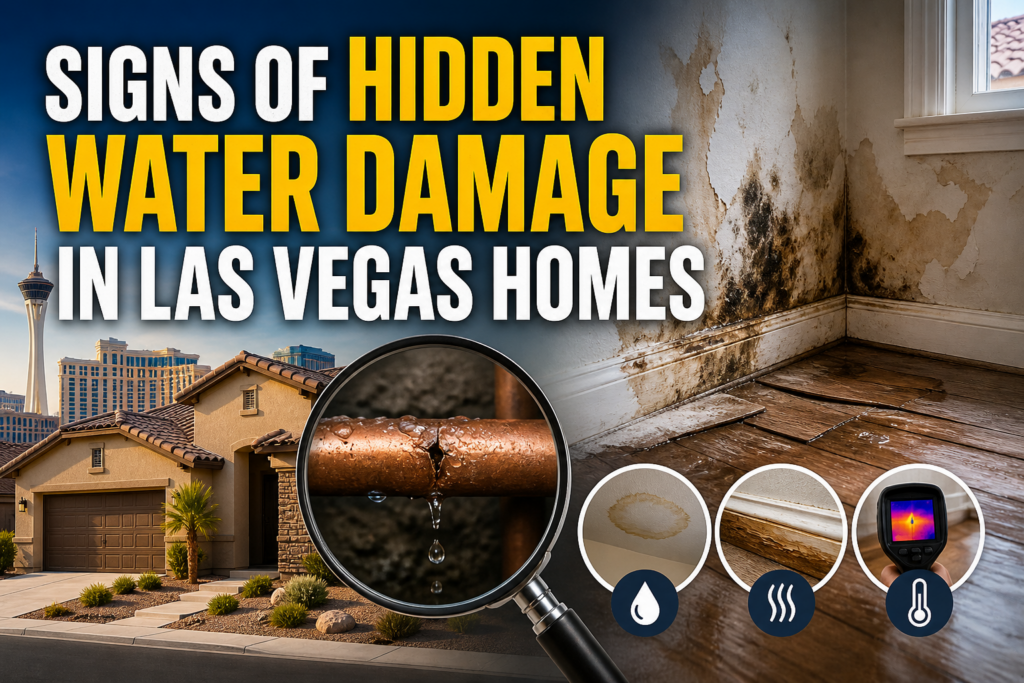
Living in the Mojave Desert, Las Vegas homeowners often overlook the threat of hidden water damage. Unlike obvious floods in wetter climates, Southern Nevada’s damage is subtle, occurring behind drywall or beneath concrete foundations. Our extremely dry air causes surface moisture to evaporate quickly, masking leaks that continue to rot wood and grow mold internally. Recognizing these early warning signs is vital to preventing foundation failure and expensive structural repairs. This guide explores the most common signs of hidden water damage in Las Vegas. It focuses on the unique construction and environmental factors prevalent in Las Vegas homes.
Why Hidden Water Damage is a Unique Threat in Las Vegas
Las Vegas homes face plumbing challenges that are rare in other parts of the country. The primary culprit is Southern Nevada’s “hard water.” Because it contains high concentrations of calcium and magnesium, this water leads to significant mineral buildup, or calcification, inside your pipes. Over time, this buildup creates pressure and corrosion, resulting in “pinhole leaks” that can drip for months unnoticed.
Additionally, most local homes are built on concrete slabs. When a pipe fails beneath this foundation, a “slab leak” remains invisible to the naked eye. Without early detection, these leaks can wash away the soil supporting your home, leading to catastrophic settlement and cracked foundations.
1. Unexplained Spikes in Your Water Bill
Your monthly utility statement is your first line of defense. If your water usage has suddenly increased without a change in habits, such as filling a pool or seasonal landscaping adjustments, there is likely a hidden leak.
In Las Vegas, the Southern Nevada Water Authority (SNWA) uses tiered pricing. A hidden leak doesn’t just waste water. It can push you into a higher, more expensive tier. To test for a leak, turn off all taps and check your water meter. If the low-flow indicator is moving, you have a plumbing problem that needs immediate handyman intervention.
2. Persistent Musty Odors and Hidden Mold
It’s a common myth that mold can’t grow in the desert. In reality, a hidden pipe leak creates a perfect, humid micro-climate behind your walls. Mold thrives on organic materials like drywall and wood, even when the outside humidity is near zero.
If you notice a damp, earthy smell in a specific room that persists despite cleaning, moisture is likely trapped nearby. By the time you see dark spots on baseboards or drywall, the mold colony is already well-established. Early detection by a professional allows you to address the leak before it becomes a health hazard or requires professional remediation.
3. Visual Changes in Walls, Ceilings, and Floors
Water follows gravity and the path of least resistance. Keep a vigilant eye out for these structural changes:
- Bubbling Paint or Peeling Wallpaper: Moisture trapped behind the surface breaks the adhesive bond, causing the paint to blister.
- Warped Baseboards: Wooden baseboards are highly absorbent. If they look “wavy” or pull away from the wall, they are likely sitting in water.
- Ceiling Stains: In two-story homes, a faint yellow or brown ring on the downstairs ceiling indicates a leak in an upstairs bathroom or appliance.
- Buckling Floors: Whether you have laminate, wood, or tile, moisture underneath can cause “cupping” or loosen the floor’s bond to the slab.
4. The Sound of Running Water
When your house is quiet, listen for the sound of rushing water, hissing, or faint dripping. If your faucets are off and your toilets aren’t running, this sound is a major red flag. In Las Vegas, this often indicates a slab leak. Because pipes are encased in concrete, the sound often vibrates through the floor. If the sound seems to come from the ground itself, it is time to call for a professional inspection immediately.
5. Warm Spots on the Floor
One of the most distinct signs of a slab leak in Las Vegas is a “hot spot” on your floor. If you walk across your tile or laminate and feel a patch that is noticeably warmer than the rest, a hot water line has likely ruptured beneath the concrete. This radiates heat upward through the flooring. Not only is this a sign of structural danger, but it also means your water heater is running constantly, driving up your energy bills.
6. Sudden Drops in Water Pressure
While old fixtures can cause low pressure, a sudden, house-wide drop in water pressure often signals a significant leak in your main line. In our region, hard water scale can also break loose and clog pipes, but if the pressure drop is accompanied by damp spots or sounds of running water, you are likely dealing with a significant hidden leak.
When to Call a Las Vegas Handyman
Detecting signs is the first step, but DIY repairs on structural elements can be risky. A professional handyman can help with:
- Drywall Repair: Removing damaged sections and ensuring the area is dry before patching.
- Cabinet Restoration: Fixing warped wood under sinks.
- Baseboard Replacement: Swapping out rotted trim.
- Source Identification: Efficiently handling minor issues like leaking p-traps or loose toilet seals.
Read Also: Water Damage Repair in Las Vegas: What Homeowners Should Do First
How a Las Vegas Handyman Protects Your Home
Homeowners often wait to call a high-priced restoration company, but a versatile handyman service like Call 4 Handyman Las Vegas is your best first step. We specialize in early detection and repair, identifying small issues before they become disasters.
A handyman can perform a comprehensive inspection checking water heater connections, under-sink plumbing, and toilet seals using local knowledge of common Las Vegas building practices. We provide a cost-effective, all-in-one solution for maintaining your home’s safety from replacing a corroded valve to repairing the drywall damaged by a leak.
DIY Home Health Checklist
Perform this 10-minute check monthly to catch leaks early:
- Under-Sink Inspection: Use a flashlight to check for dampness or “salty” mineral crusts on pipe joints.
- Water Heater Check: Look for rust at the base or standing water in the overflow pan.
- The Dye Test: Put food coloring in your toilet tank. If color reaches the bowl without flushing, you have a leak.
- Exterior Stucco: Look for efflorescence (white, powdery stains) on exterior walls, which can signal an interior pipe leak.
FAQs
1. How do I know if I have a slab leak?
Signs include unexplained warm spots on the floor, the sound of running water under the foundation, a spike in your water bill, and cracks in your flooring or walls.
2. Can hard water cause leaks in Las Vegas homes?
Yes. Minerals like calcium and magnesium cause scale buildup that corrodes copper pipes from the inside out, leading to small, hidden “pinhole” leaks.
3. Does mold actually grow in dry desert climates?
Yes. While the outside air is dry, a hidden leak creates a high-humidity environment behind walls where mold can flourish undetected for months.
4. How much does it cost to repair hidden water damage?
Small repairs like replacing a valve or a single section of drywall are affordable. However, ignoring a leak can lead to thousands in foundation repair and mold remediation costs.
Read Also: Signs of Mold in Your Home
5. Why hire a handyman instead of a specialized plumber?
A handyman offers a one-stop solution. We can fix many common leaks and immediately repair the resulting damage to your drywall, trim, and paint, saving you time and money.
Conclusion
Hidden water damage is a silent threat that requires a proactive approach, especially in the harsh Las Vegas environment. You can protect your property from devastating structural failure by monitoring your water bills and watching for subtle signs like musty smells, warped surfaces, or warm spots.
Don’t let a small drip turn into a foundation-cracking disaster. If you suspect your home has a hidden plumbing problem, contact Call 4 Handyman Las Vegas today. Our team is ready to help you identify the source and restore your home to safety.