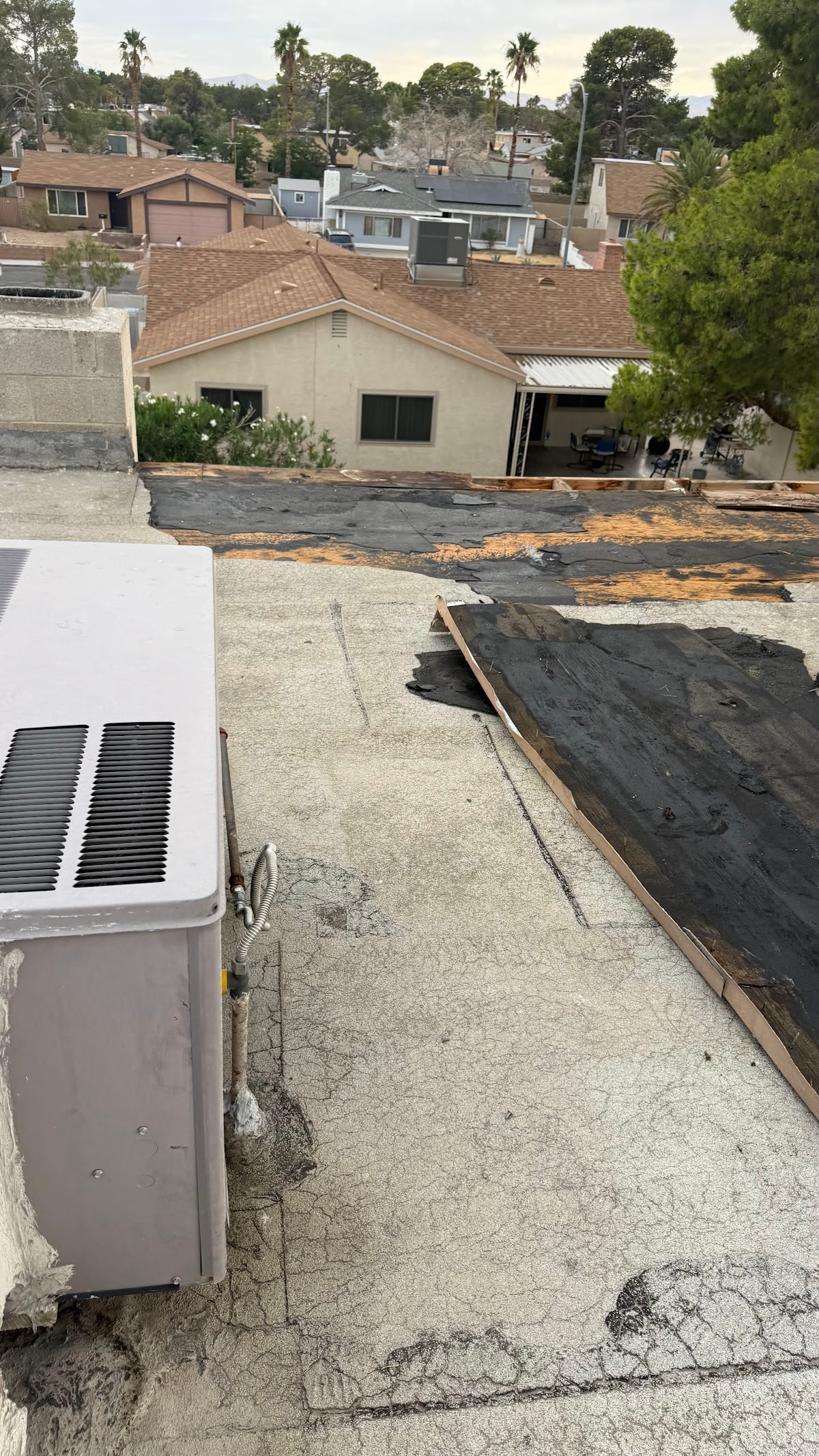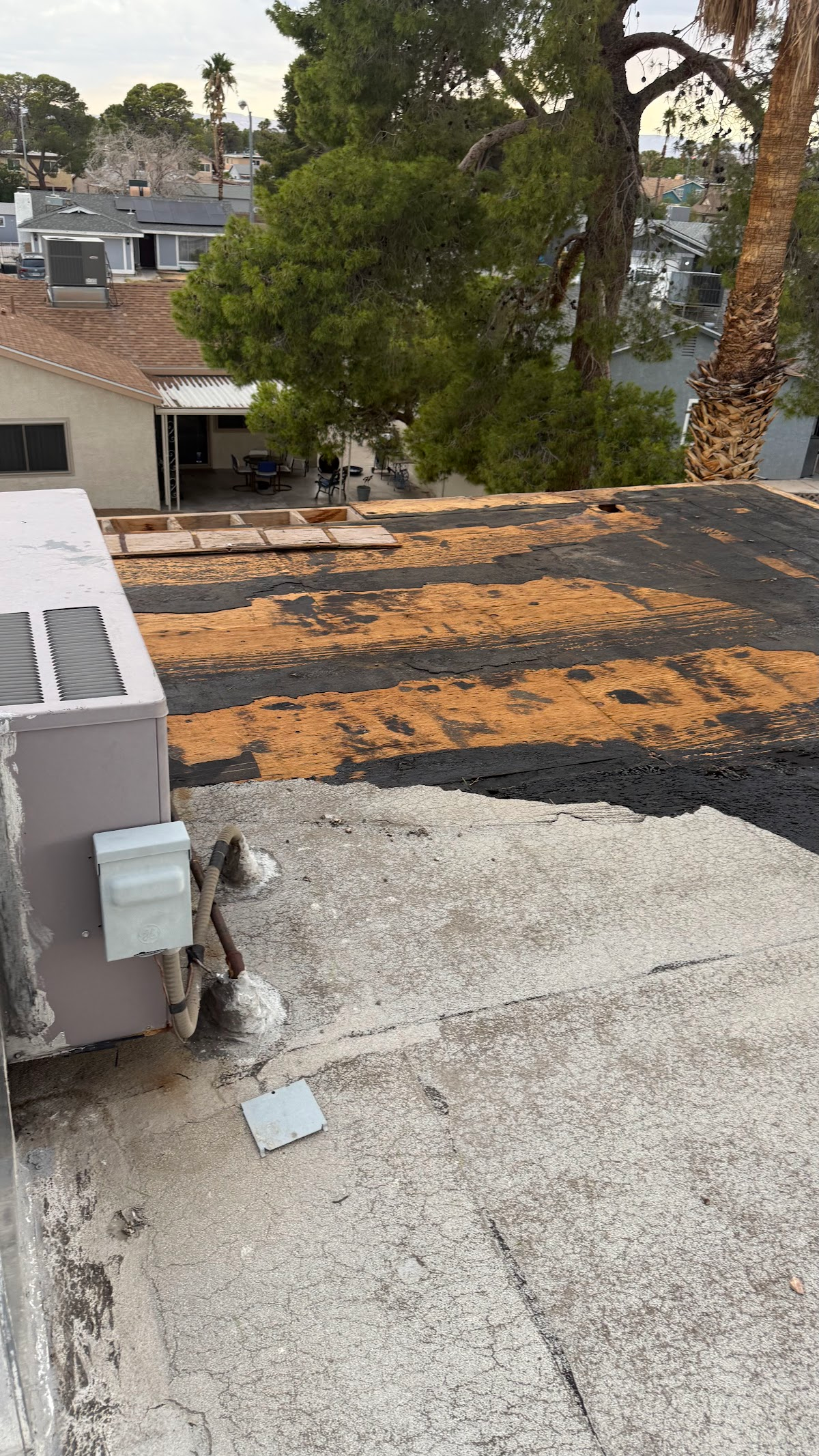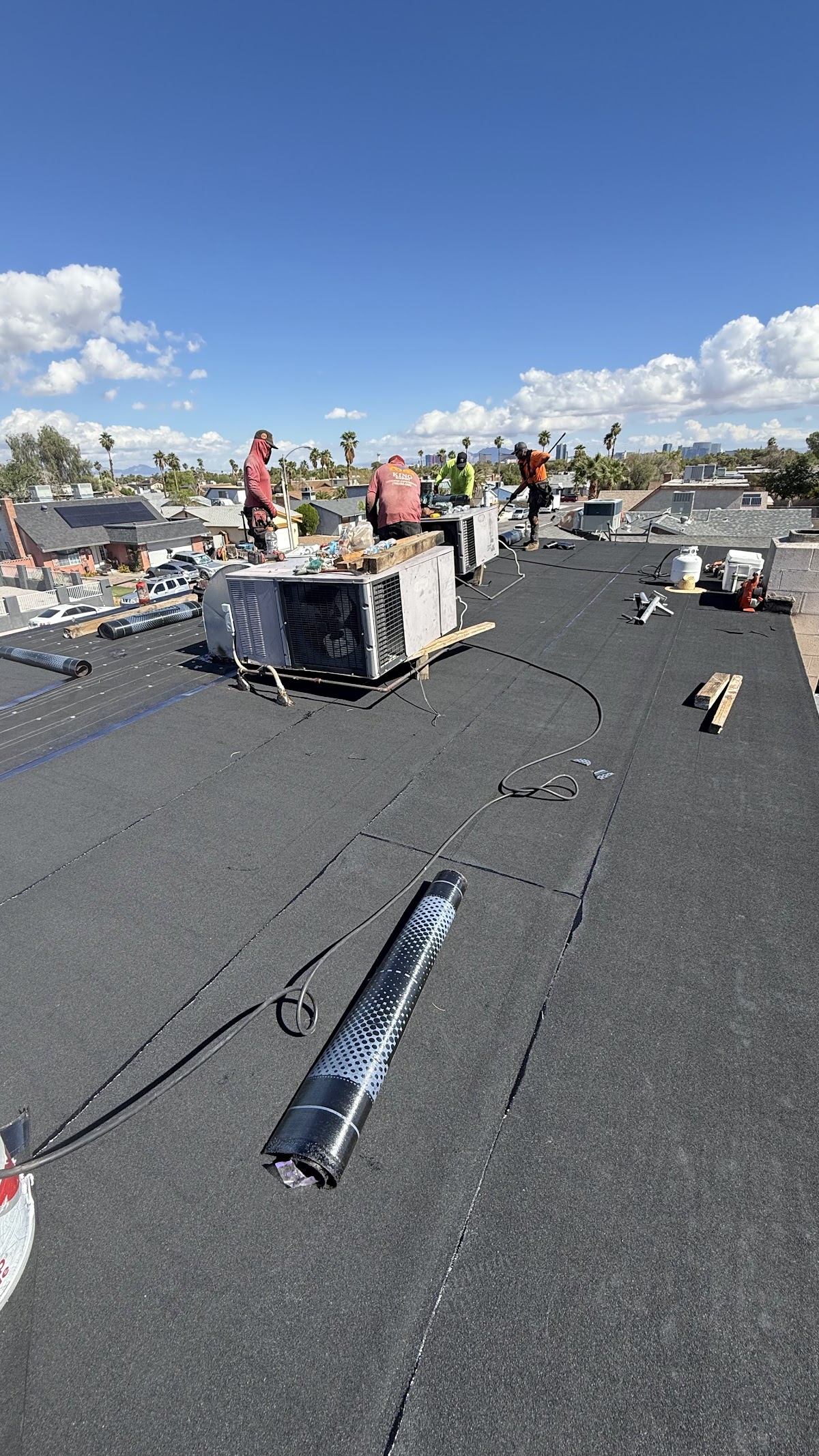
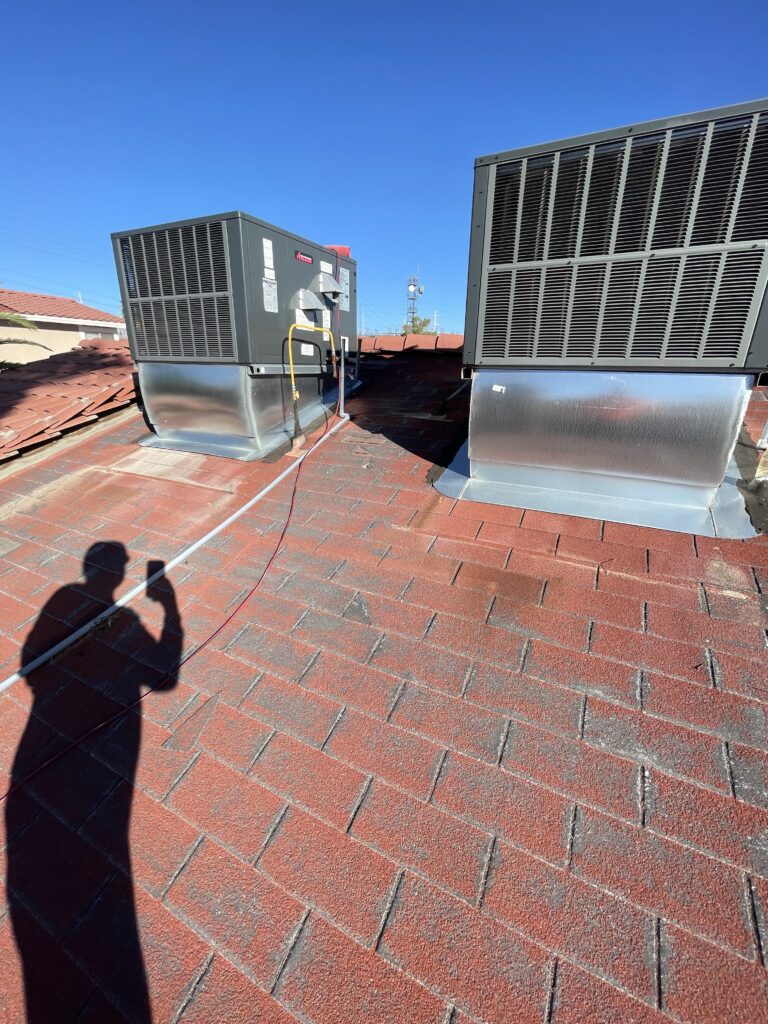
A roof leak near a rooftop air conditioner can start with a small gap around the flashing. During rain, water can enter where the AC curb, duct opening, or nearby roof penetration meets the roofing system. If those connections were not waterproofed correctly during installation or replacement, the damage may remain hidden until the next storm.
Call 4 Handyman helps homeowners in Las Vegas, Henderson, and North Las Vegas arrange roof leak repairs around rooftop AC units. The first step is finding the actual entry point so the repair addresses the cause of the leak.
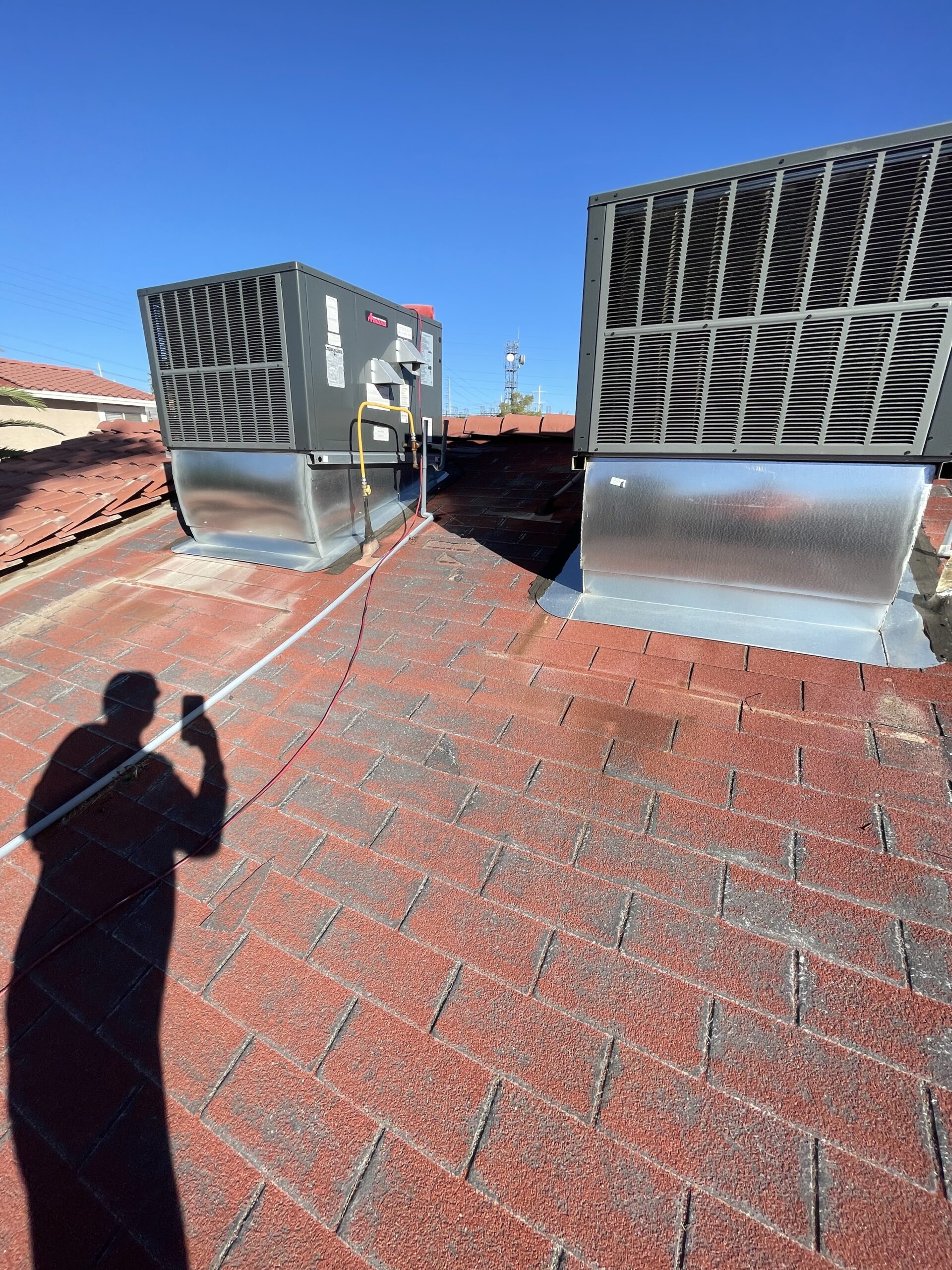
Why the roof around an AC unit can leak
Rooftop equipment creates several transitions that need careful weatherproofing. Flashing is the material that directs water away from these transitions. The roof covering, underlayment or membrane, flashing, and equipment curb must work together to keep rain outside.
Problems can develop when flashing is missing, poorly overlapped, loose, or disconnected from the surrounding roofing. An AC replacement can also disturb older flashing or damage nearby tiles and roofing materials. Installation errors are one possible cause, but age, weather exposure, previous repairs, and maintenance damage can produce similar symptoms. An inspection is needed before assigning responsibility.
Small openings at fasteners, duct penetrations, or flashing corners can allow water into the roof assembly. Once inside, water may travel along framing or ductwork before appearing on a ceiling, so the stain does not always sit directly below the entry point.
Signs that the AC flashing area needs an inspection
Look for ceiling stains that appear or grow after rain, bubbling paint, damp drywall, or recurring leaks near the room below the rooftop equipment. A leak that begins after an AC replacement is also a reason to inspect the surrounding roof connections.
From a professional roof inspection, warning signs may include separated flashing joints, damaged membrane around the curb, exposed fasteners, broken tiles, or several layers of old patching. Homeowners should avoid climbing onto the roof to investigate, especially during wet or windy conditions.
Our roof inspection service in Las Vegas can help identify the areas that need attention before another rain exposes the roof leak.
Is it a roof leak or an air-conditioning problem?
Water near an AC unit does not automatically mean the roof is leaking. Air-conditioning equipment can also produce water through a blocked condensate drain, a drain-pan problem, or condensation associated with duct insulation issues.
Timing gives useful clues. Water that appears mainly during rain may point toward the roof or flashing. Water that appears while the AC runs on a dry day may suggest a condensate or equipment issue. These patterns are clues rather than proof, and both problems can occur together.
We assess the roofing around the equipment and explain when an HVAC technician should inspect the AC system. Equipment disconnection, lifting, refrigerant work, and mechanical repairs should be coordinated with the appropriate HVAC professional when needed.
5 steps for roof leak repairs around rooftop AC units
1. Inspect and document the affected area. We examine accessible roof connections, flashing, surrounding roofing, and the reported roof leak location. Photos help explain the findings and the proposed scope.
2. Identify the repair area. The visible gap may be only part of the problem. Depending on the roof condition, accessing the damaged section may require removing nearby tiles or opening a section of roofing to inspect the waterproofing beneath.
3. Repair the waterproofing connection. The repair may involve replacing damaged flashing, restoring the connection to the roof membrane or underlayment, addressing penetrations, or replacing deteriorated adjacent materials. The method depends on the roof type and equipment configuration.
4. Restore the surrounding roofing. Removed roofing materials are reinstated or replaced as appropriate. If deteriorated decking or other concealed damage is discovered, we explain the additional work before proceeding.
5. Review the completed repair. We document the finished work and discuss any remaining maintenance needs. When appropriate for the roof assembly and site conditions, controlled water testing can help evaluate the repaired area; a test cannot guarantee that every unrelated leak has been eliminated.
Why adding more sealant may not solve the problem
A compatible sealant can be part of a proper repair, but applying another layer over a failed connection may leave the underlying defect in place. Incorrect flashing overlaps, damaged underlayment, and poorly integrated curb details require attention to the assembly itself.
Our roof flashing repair service focuses on the connection between roofing components. The goal is to direct water away from vulnerable openings using a repair suited to the existing roof.
Tile roofs and flat roofs need different repair details
On tile roofs, the visible tiles are only part of the system. Water entering around an AC penetration may reach damaged material beneath them. Read more about tile roof underlayment in Las Vegas and why its condition matters when investigating a leak.
On flat and low-slope roofs, the membrane connection around the equipment curb and nearby penetrations deserves careful inspection. Drainage and areas where water collects may also affect the repair scope. See our flat roof repair service for related roofing concerns.
What affects the cost of an AC-area roof repair?
A roof leak repair estimate depends on access, roof material, the condition of the flashing and surrounding waterproofing, and the size of the affected area. A localized flashing repair has a different scope from replacing deteriorated underlayment or repairing concealed damage. Equipment that must be lifted or disconnected can also require separate HVAC coordination.
We recommend a roof leak inspection before quoting a repair. Photos and a written scope help you understand what is included and whether additional work may be needed.
Frequently asked questions
Can a newly installed AC unit cause a roof leak?
Yes. If installation disturbs the roof or leaves a poorly waterproofed connection, rain can enter. However, an inspection is needed to distinguish installation damage from older roofing defects or an AC drainage problem.
Does the entire roof need replacing?
Not necessarily. A localized problem may be repairable when the surrounding roof is in serviceable condition. Widespread deterioration can require a larger repair scope.
Should I repaint the ceiling right away?
Repair the water source first and have affected materials assessed and dried before cosmetic work. Painting over a damp stain does not resolve the leak.
Schedule roof leak repair around your AC unit
If water is entering your home near a rooftop air conditioner, have the roof and flashing checked before the next storm. Call 4 Handyman serves Las Vegas, Henderson, and North Las Vegas, including nearby communities such as Summerlin, Spring Valley, Enterprise, and Green Valley.
Call 702-752-0758 to discuss the leak and schedule an inspection. Tell us whether the water appears during rain, while the AC runs, or after a recent equipment installation so we can better understand the problem.
Before approving roof leak repairs, review the written scope and verify business credentials through the Nevada State Contractors Board. Keep inspection photos and repair records with your home maintenance documents.
What to do indoors before the inspection
If a roof leak appears during rain, protect the room before trying to diagnose the roof. Move furniture and electronics away from the wet area when you can do so safely. Place a container under a small drip and protect the floor without creating a slippery walking surface. Keep children and pets away from the affected room. A swollen ceiling, sagging drywall, water around light fixtures, or a sudden increase in flow needs prompt professional attention. Avoid touching wet electrical equipment or opening a ceiling yourself. Describe those conditions when requesting help so the response can match the situation.
Take photos from the floor at different times during the storm. Record when the drip begins, how long it continues, and whether the air conditioner was running. Save any earlier AC installation paperwork and roof repair invoices. These records can help the roofer and HVAC technician compare possible causes. They do not establish responsibility by themselves, but they make the inspection more efficient. If the water source is still uncertain, be clear about that uncertainty rather than assuming every stain near the unit has the same cause.
Questions to ask about the proposed flashing repair
Ask which connection is allowing water into the assembly and how the proposed work will restore that connection. A useful estimate distinguishes the roof covering from the waterproofing beneath it. It should explain what will be removed, which materials will be replaced, what can be reused, and whether any equipment must move. Ask how the repair will meet the existing roof without blocking drainage. Request clarification about access, protection for the property, debris removal, and any work excluded from the price. A clear scope helps you compare estimates for the same problem.
Also ask how hidden damage will be handled. Until roofing materials are opened, the full condition of decking, insulation, and adjacent waterproofing may be unknown. The estimate can explain how additional findings will be documented and approved. Photos are useful here because a homeowner may never see the area directly. Keep the completed-work photos with the estimate and invoice. When an HVAC company is involved, ask who coordinates the schedule and who checks the mechanical equipment after it is reconnected. Avoid an arrangement where each company assumes the other is responsible for a critical connection.
Why Las Vegas weather matters around rooftop equipment
Las Vegas roofs face strong sun, heat, wind, and occasional heavy rain. Those conditions make transitions around equipment worth checking as part of routine maintenance. Different materials move differently as temperatures change. An exposed connection that once appeared tight can develop a gap over time. Wind-blown debris may collect around a curb or drainage route, and maintenance visits can disturb nearby tiles. These are reasons to inspect the assembly carefully rather than treat the roof leak as a simple surface blemish. The repair must suit the materials already on the building.
A dry period can make a roof problem seem resolved even when the opening remains. Watch the repaired area during later rain and retain a record of any new staining. If a new stain appears in a different room, report its location and timing rather than assuming the original repair failed. Buildings can have more than one water entry point. An inspection should consider the direction water can travel inside the assembly and whether another penetration, roof transition, or drainage problem needs attention. A broader investigation may be appropriate when symptoms do not match the initial findings.
Plan ceiling and interior repairs after the water source is addressed
Interior restoration should follow the moisture assessment. Wet materials may need drying, removal, or further evaluation depending on the condition and extent of the damage. A surface that feels dry is not always ready for finishing. Ask how the affected area will be checked before closing it up. Coordinate the roofing and interior work so the ceiling is not patched while water is still entering. If the stain returns, document it promptly and contact the team that inspected the source. Keeping the sequence clear can prevent repeated painting and unnecessary disruption.
For damage beyond the roof, review our water damage repair services and drywall repair in Las Vegas. Describe the affected rooms, visible damage, and whether the leak is active. These details help separate emergency protection from later restoration. If you are working with an insurer, keep your own dated photos, estimates, and invoices and ask the insurer about its documentation requirements. Coverage and claim decisions depend on the policy and the facts of the loss.
Prepare a practical maintenance and repair list
A roof inspection can also identify separate maintenance items that deserve scheduling. Ask the inspector to distinguish the immediate roof leak repair from unrelated work so you can prioritize clearly. Do not approve a larger project solely because a localized flashing defect exists. Conversely, a small visible gap should not distract from widespread deterioration if the inspection documents it. The recommendation should explain the condition of the surrounding roof and why a limited repair or a broader scope is appropriate. Written findings give you something concrete to review before committing to the work.
For general property planning, explore our home repair services and project gallery. Homeowners in nearby communities can review Henderson handyman services before arranging related repairs. To discuss a roof leak around your AC, use the estimate request form and explain when water appears, the roof type if known, and any recent equipment work. Include photos taken safely from inside or at ground level. The next step is an assessment of the actual conditions, followed by a repair scope you can understand.
Roof leak inspection questions homeowners often ask
Can a roof leak stop when the weather clears?
Yes, the dripping may stop simply because rain is no longer reaching the opening. That does not show that the roof leak has repaired itself. Note the last time water appeared and arrange an inspection while the conditions can still be documented. Avoid using the absence of a drip during a dry week as the only test of the roof assembly. A professional can explain what was inspected and which details still need investigation.
Should the AC installer inspect the roof leak too?
If the roof leak started after equipment work, share that timing with both the roofer and the HVAC company. The HVAC technician can check equipment-related water sources and explain what was moved during installation. The roofer can assess the waterproofing connection. Coordination is especially useful when equipment access affects the repair. Ask for findings in writing, and keep the conversation focused on the visible conditions until the cause has been established.
What if the roof leak is beside a solar panel or another penetration?
Tell the inspection team about nearby equipment before the visit. The roof leak could involve a separate penetration, and access may require coordination with another specialist. Do not disconnect solar equipment or climb between roof-mounted systems yourself. Ask which areas are accessible, which cannot be checked without further arrangements, and how those limitations affect the estimate. A documented limitation is more useful than an unsupported assurance about an area nobody inspected.
Can I wait to fix a small roof leak?
A small roof leak can still wet concealed materials, so arrange an assessment rather than relying on the size of the visible stain. Describe whether the area is growing and whether any ceiling material is soft or sagging. If the first available permanent repair is later, ask what temporary protection is appropriate for that specific roof. Temporary measures have limits and should be described as such. Keep monitoring from a safe indoor location until the permanent work is completed.
How should I review the roof leak repair afterward?
Compare the completed work with the approved scope and request photos of the repaired connection. Ask whether any separate issue remains and what symptoms should prompt another call. Keep the invoice, material information, and any written warranty terms together. During later rain, check the previously affected indoor area safely and record changes. If a roof leak returns, provide the repair date and current photos so the next inspection can distinguish a recurring defect from a different source.
Roof and HVAC detail photos from our project library