
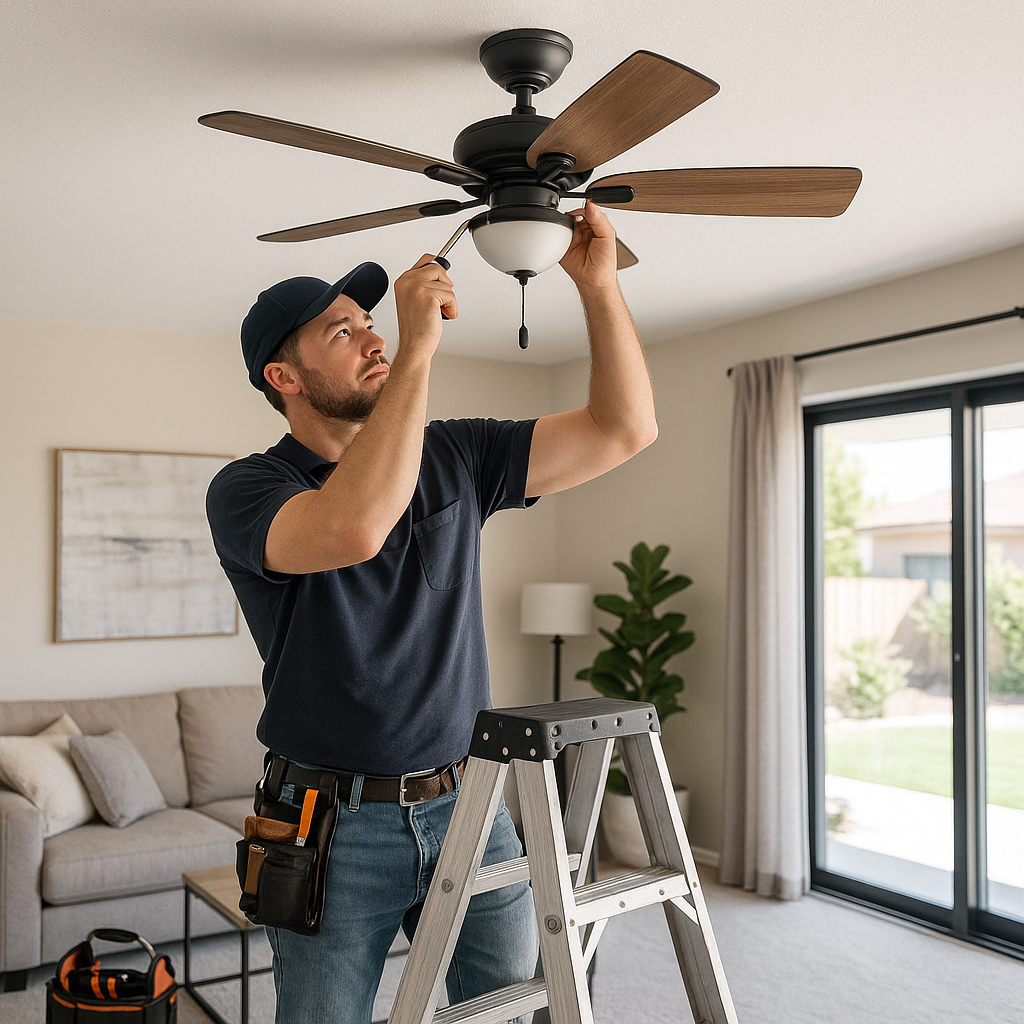
A covered patio with a good ceiling fan is usable for much more of the year in Henderson. But an indoor fan hung outside will not last. Heat, dust, monsoon humidity and the occasional blowing rain break down indoor motors, blades and finishes. Here is how to choose and install a fan that holds up outdoors.
Planning Your Project: Outdoor Ceiling Fan
Call 4 Handyman handles requests for outdoor ceiling fan and related work. Send photos or call 702-752-0758, and we will review the job, explain your options, and give you a written estimate before any work begins. Larger projects can require a permit, so it is worth checking the building requirements with the City of Henderson before you start.
Damp-rated or wet-rated?
- Damp-rated: for fully covered areas where the fan never gets rained on directly, such as a covered patio with a solid roof or a screened porch.
- Wet-rated: for spots where rain, sprinklers or hose spray can reach the fan, such as pergolas, open-sided patio covers, gazebos or the outer edge of a covered patio.
When in doubt, choose wet-rated. The rating is printed on the box and the fan’s label.
What to look for in a Henderson patio fan
- UV-resistant blades and finish: desert sun fades and warps cheaper materials quickly.
- Sealed motor housing: keeps dust out of the motor.
- Stainless or coated hardware: resists rust from monsoon humidity.
- Enough size: patios usually need a larger fan than you would expect, since there are no walls to hold the airflow in. See our ceiling fan size guide.
Installation details that matter outside
- Outdoor-rated electrical box that is fan-rated and secured to the patio cover framing, not just the ceiling finish.
- Patio cover strength: some aluminum and lattice patio covers need added blocking before they can safely hold a fan.
- Height: blades at least 7 feet above the deck, and clear of beams and posts.
- Wind: patios see more wind than rooms, so balance the blades and check the mount carefully. See ceiling fan wobbling.
- Power: if the patio has no existing light or fan box, running a new circuit or box is electrical work that may need a licensed electrician.
Upkeep
Wipe dust off the blades every month or two during summer, check that the mounting screws are tight before monsoon season, and keep the fan off during strong wind. A remote makes it easy to shut off from inside. See smart and remote fan upgrades.
Get a patio fan installed in Henderson
Send a photo of the patio cover, where you want the fan, and whether there is an existing box through our estimate request form. See ceiling fan installation in Henderson, NV, or call 702-752-0758.
Choosing an Outdoor Ceiling Fan for a Las Vegas Patio
An outdoor ceiling fan makes a covered patio usable for more of the year in Las Vegas. The right fan has to handle heat, dust and, in some spots, rain.
Damp-Rated vs. Wet-Rated
- Damp-rated: for fully covered patios where rain does not reach the fan
- Wet-rated: for areas exposed to rain, sprinklers or misting systems
If your patio has a misting system, choose a wet-rated outdoor ceiling fan.
Size and Airflow
Larger patios need larger blades or more than one fan. Check the fan’s CFM rating; higher CFM moves more air.
Materials That Last in the Desert
Look for UV-resistant blades, sealed motors and rust-resistant finishes. Plastic or composite blades hold up better than wood in the sun.
Mounting Height
Blades should be at least 7 feet above the floor. For high patio ceilings, use a downrod so the fan sits at a useful height.
Installation Tips
The fan must mount to a fan-rated box secured to framing. Many patios need a new box or wiring run. We install the box, wire the fan, and balance it so it runs quietly.
For outdoor ceiling fan installation, call 702-752-0758.
How an Outdoor Ceiling Fan Is Different From an Indoor Fan
An outdoor ceiling fan is built to handle conditions an indoor fan never sees: moisture, dust, wide temperature swings and direct UV exposure. Installing an indoor fan on a patio is one of the most common mistakes we see. Within a season or two, the blades warp, the finish fades, the motor housing rusts and the fan becomes noisy or unsafe.
UL Ratings Explained
- Dry-rated: indoor use only
- Damp-rated: covered patios, porches and bathrooms where the fan is protected from direct rain
- Wet-rated: open pergolas, gazebos and patios with misting systems, where water can hit the fan directly
In Henderson and Las Vegas, many homeowners run misters in summer. Mist settles on the fan just like rain, so a wet-rated outdoor ceiling fan is the safe choice for any patio with misters.
Materials That Hold Up in the Desert
- Blades: ABS plastic or composite blades resist warping and fading better than wood or MDF
- Housing: powder-coated or stainless finishes resist corrosion
- Motor: sealed motors keep dust out of the bearings
- Hardware: stainless screws and brackets prevent rust stains on ceilings
Sizing an Outdoor Ceiling Fan
Patios are often long and narrow or very large, so one fan may not cover the space evenly.
- Patios up to about 100 square feet: 42 to 48 inch blades
- 100 to 200 square feet: 52 to 56 inch blades
- 200 to 400 square feet: 60 inch or larger blades, or two fans
- Long patios: two smaller fans spaced evenly usually work better than one large fan
Check the CFM (cubic feet per minute) rating. Outdoor air is warmer and the breeze must reach people seated across the patio, so higher airflow is better. Look for fans rated above 5,000 CFM for medium and large patios.
Mounting Height and Clearance
- Blades at least 7 feet above the patio floor, ideally 8 to 9 feet
- At least 18 inches between blade tips and walls, beams or posts
- Enough clearance from patio heaters, which can damage blades
- Clear of misting lines so blades do not strike them
High patio ceilings need a downrod to bring the fan to a useful height. Sloped patio covers need an angled mounting adapter.
Electrical Requirements
An outdoor ceiling fan must be mounted to a fan-rated box suitable for damp or wet locations and secured to framing. Many patios were built with light fixture boxes or no box at all. Typical electrical work includes:
- Installing a fan-rated weatherproof box and brace
- Running a new circuit or extending an existing one through the patio cover
- Adding a GFCI-protected circuit where required
- Installing a wall control or remote receiver
Outdoor wiring should be done carefully because moisture and dust are harder on connections than indoor conditions.
Our Installation Process
1. Review the patio size, ceiling type and misting system
2. Recommend fan size, rating and number of fans
3. Install or upgrade the fan-rated box and wiring
4. Assemble with the correct downrod and mounting kit
5. Wire, mount and balance the fan
6. Test speeds, reverse and lighting, and set up the remote
7. Clean up and remove packaging
Lighting Options
Many outdoor ceiling fans include LED lights. Warm color temperatures create a relaxed evening setting, while brighter, neutral light works for outdoor kitchens and grilling areas. Choose a sealed light kit so dust and insects stay out. If your patio already has enough lighting, a fan without a light is simpler and often quieter.
Controls for Patio Fans
- Wall control: convenient, but requires wiring to the switch location
- Remote control: easy to use from a lounge chair and often the simplest retrofit
- Smart control: lets you turn the fan on from your phone or set schedules
Caring for an Outdoor Ceiling Fan in Las Vegas
Desert dust is the biggest enemy of patio fans.
- Wipe blades monthly during summer
- Rinse off misting residue, which leaves mineral spots
- Check and tighten blade screws each spring
- Inspect the canopy for gaps where insects can nest
- Clean the light cover so the LED stays bright
Hard water from misters can build scale on fan surfaces. A soft cloth with a little vinegar solution removes it without harming most finishes.
Common Problems We Fix on Patio Fans
- Wobbling caused by warped blades or loose brackets
- Rusted housings on indoor fans used outdoors
- Remote receivers damaged by heat
- Fans mounted to non-rated boxes that have pulled loose
- Blades striking misting lines or beams
Outdoor Ceiling Fan Ideas for Different Spaces
Covered Back Patios
The most common spot. Most covered patios in Henderson have a solid roof attached to the house. A damp-rated fan is the minimum; choose wet-rated if you have misters. If the patio is long, center one fan over the seating area and another over the dining or grill area.
Pergolas and Open Structures
Open-roof pergolas let rain and sun reach the fan, so only wet-rated fans belong there. The fan must attach to a solid beam with a fan-rated mount, and wiring has to be routed in weatherproof conduit.
Outdoor Kitchens
Grilling areas get hot. A fan here helps move smoke and heat away from the cook. Mount it far enough from the grill hood that heat does not damage the blades, and choose a model with a sealed motor that resists grease and dust.
Front Porches and Courtyards
Entry courtyards in Spanish-style homes and front porches benefit from a smaller decorative fan that matches exterior lighting. A fan with an integrated light can replace an existing porch light if the box is upgraded to fan-rated.
Garages and Workshops
Garages in Las Vegas can reach extreme temperatures. A high-airflow fan rated for damp locations makes the space usable for projects. Make sure there is enough clearance above vehicles and garage door tracks.
Choosing a Style That Fits Your Home
Outdoor fans come in modern, rustic, Spanish, farmhouse and coastal designs. Matching the finish to exterior light fixtures and hardware ties the patio together. Many Henderson HOAs do not regulate fans under a patio cover, but if a fan is visible from the street on a front porch, choose a finish that fits the home’s exterior colors.
Patio Comfort Beyond the Fan
An outdoor ceiling fan works best alongside other comfort upgrades: shade screens on the west side, misters on a timer, and outdoor-rated lighting. We can install fans, lights, shade hooks and other patio hardware in the same visit, so your patio is ready for summer.
Call 702-752-0758 to plan and install an outdoor ceiling fan anywhere in Henderson and Las Vegas.
Budget Factors
The cost of adding an outdoor ceiling fan depends on whether a fan-rated box and wiring already exist at the location, the ceiling height and type, the number of fans, the control method, and the fan model you choose. Swapping a fan onto an existing rated box is the simplest job. Running new wiring through a finished patio cover, adding a wall control, or mounting to an open pergola beam adds labor. We explain each part of the price before we start, and grouping two or more fans in one visit lowers the cost per fan. If you are not sure what your patio needs, send us a few photos of the ceiling, the existing light or box, and the overall space, and we can usually give you a close estimate before the visit.
Frequently Asked Questions
Can I use an indoor fan on a covered patio?
No. Even under a cover, patios get dust, humidity and temperature swings. Use at least a damp-rated outdoor ceiling fan.
What about a patio with misters?
Choose a wet-rated fan. Mist settles on the fan like light rain.
How many fans do I need?
It depends on the patio shape and size. Long patios usually need two fans for even airflow.
Do fans actually cool a patio?
Fans do not lower air temperature, but moving air makes people feel several degrees cooler, and it helps keep flying insects away.
To install an outdoor ceiling fan on your Henderson or Las Vegas patio, call 702-752-0758.